
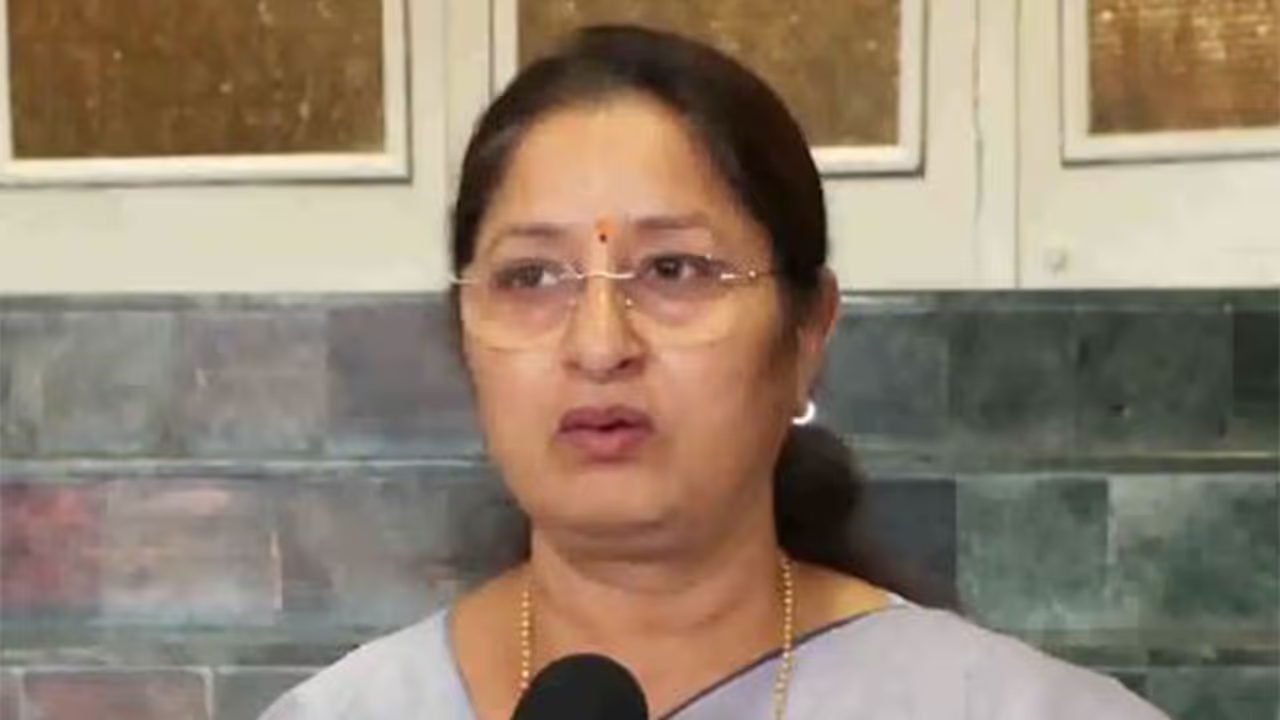
Union Minister Annapurna Devi hailed the Women's Reservation Bill as a 'historic occasion,' announcing a special conference attended by PM Modi. Parliament will amend the Nari Shakti Vandan Act, using the 2011 census for delimitation.
Nari Shakti Vandan Adhiniyam Conference
Union Minister for Women and Child Development Annapurna Devi on Sunday highlighted the significance of the Women's Reservation Bill, stating that a special conference has been organised to mark the occasion and amplify women's participation across sectors. She termed the development a "historic occasion," underlining that the long-pending demand for greater political representation of women is now being addressed.

Speaking to ANI, she said, "The Women and Child Development Department has organised a Nari Shakti Vandan Adhiniyam conference and women from across society will attend. We have also requested the Prime Minister to attend. He has given his consent. This is certainly a historic occasion. This long-standing demand of women is now certainly being fulfilled...Tomorrow's programs will certainly send a message..."
Special Parliament Session and Key Amendments
The Parliament is set to meet for a three-day special session starting April 16, with a focus on the Women's Reservation Amendment Bill. The Government has planned two major amendments.
2023's Nari Shakti Vandan Act tied women's reservation to the new census and delimitation. Due to census delays, the plan is to proceed with the 2011 census data.
The 2011 census is to be the basis for delimitation and seat redistribution.
Details of the Amendment Bills
Lok Sabha seats may increase from 543 to 816 post-amendment. A bill will be introduced in Parliament to amend the Nari Shakti Vandan Act.
A separate Delimitation Bill will be introduced. Both bills need to be passed as Constitutional amendments for women's reservation.
Lok Sabha Expansion and Reservation Quota
The new Lok Sabha is likely to have more than 800 seats.
Keeping up with the status quo, there is no provision for OBC reservation, and SC/ST reservation will continue. However, states won't have a role; the bill passed by Parliament will apply to them.
Currently, the Lok Sabha has 543 seats. With a proposed 50 per cent increase, the number of seats will rise to 816, with 273 (about a third) reserved for women.
The government's key point is that they won't wait for a new census to give women, comprising half the country's population, fair representation in Parliament. Instead, delimitation will be done using the 2011 census data. (ANI)
(Except for the headline, this story has not been edited by Asianet Newsable English staff and is published from a syndicated feed.)