
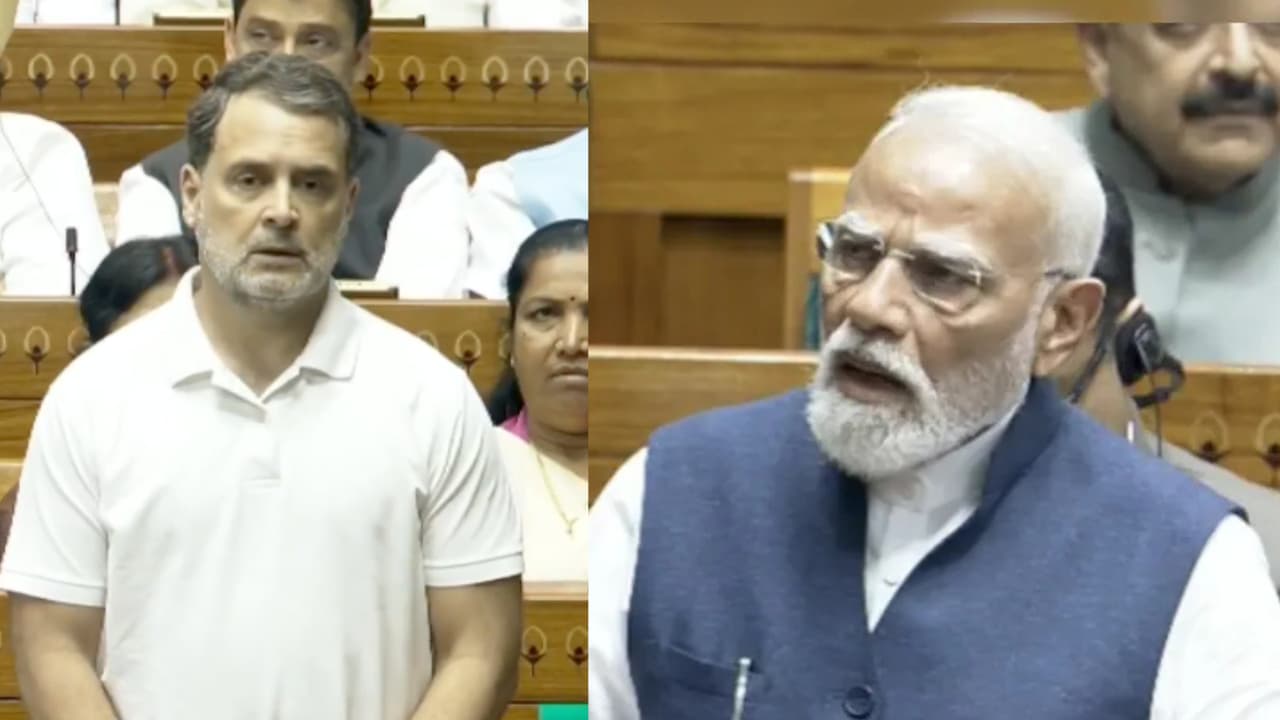
A government bill to fast-track 33% women's reservation in legislative bodies was defeated in the Lok Sabha. It failed to secure the required two-thirds majority for a constitutional amendment. Opposition parties blocked the measure, objecting to its linkage with a new delimitation exercise to redraw constituencies.
The Narendra Modi-led NDA government suffered its first major legislative defeat in the Lok Sabha after a constitutional amendment bill meant to fast-track the implementation of women’s reservation failed to secure the required two-thirds majority in Parliament.

The proposed legislation sought to operationalise the 33% reservation for women in the Lok Sabha and state assemblies before the 2029 general election, while also linking the move to a fresh delimitation exercise. However, Opposition parties united to block the measure, arguing that the Centre was attempting to push a politically sensitive redrawing of constituencies under the cover of women’s empowerment.
The bill reportedly received 298 votes in favour and 230 against, falling short of the constitutional threshold needed for passage. The defeat marked a rare setback for the government, which had strongly defended the proposal as a historic reform to improve women’s representation in politics.
Ahead of the vote, Prime Minister Narendra Modi made an emotional appeal in the House, urging lawmakers to “listen to their conscience” while deciding on the legislation. Despite that appeal, several opposition leaders insisted they were not opposing reservation for women itself, but the way the government had tied it to delimitation.
Also Read: Amit Shah slams Opposition's 'reprehensible' act on women's bill
Congress president Mallikarjun Kharge said, “We are in support of the Women’s Reservation Bill but have objection to the government’s approach.”
Rahul Gandhi also accused the government of using the bill to alter India’s political structure, saying, “This is not a women’s reservation bill, but it is a way to change India’s political structure.”
Opposition parties, particularly from southern states, argued that delimitation based on population could reduce their influence in Parliament while increasing representation in northern states with higher population growth. Critics described the move as an attempt at “gerrymandering in the name of women’s empowerment.”
The government had maintained that the legislation was necessary because the existing Women’s Reservation Act of 2023, though already notified, could only be implemented after the next census and a formal delimitation exercise. The new bill was intended to remove that delay and bring the quota into effect sooner.
Union ministers defended the proposal after the vote and signalled that the government may revisit the issue in a revised form. For now, however, the defeat has handed the Opposition a symbolic victory and exposed the political challenges the NDA faces even with a strong mandate.
The vote is likely to intensify the national debate over whether women’s political representation should move forward independently of the highly contentious delimitation process.
Also Read: Women's Bill: Congress leader flags 'conspiracy', lack of survey
