
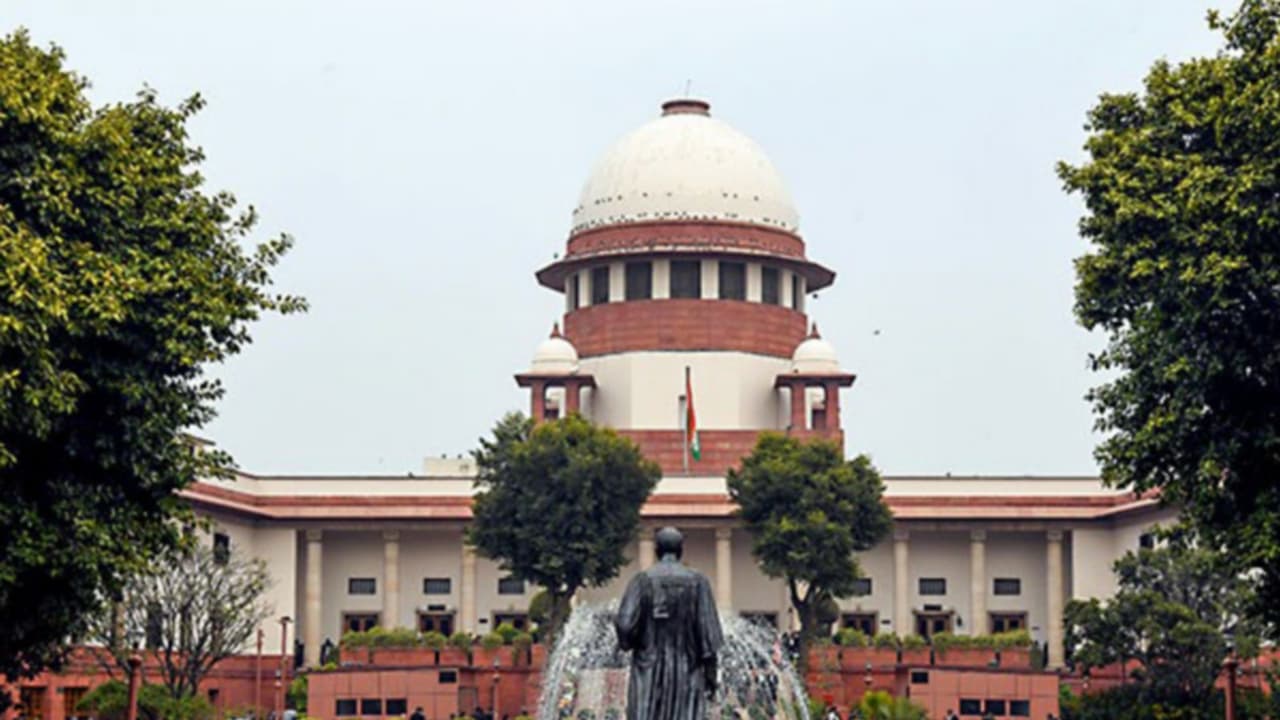
The Supreme Court noted the ECI's voter roll revision has been largely smooth, except in West Bengal where it faced litigation. The court is considering pleas on procedural irregularities and a request to extend the roll freezing date.
The Supreme Court has verbally remarked that the Election Commission of India (ECIs) decision to undertake Special Intensive Revision (SIR) exercise of voter rolls has undergone relatively smoothly in States, apart from West Bengal. The Chief Justice of India (CJI) Surya Kant remarked that there was hardly any litigation (court dispute) in terms of SIR exercise in other states. "Except West Bengal, whichever states where SIR is done, everywhere it went smoothly. Even in other States there are complications, if not equally, but there are complications. But by and large hardly any litigation came from other States", the CJI said. The remarks came as the Court was hearing a batch of pleas flagging various procedural irregularities in the ECIs SIR in West Bengal.

Considering the peculiarity of the situation, the apex court had earlier issued During the hearing, Senior Advocate and AITC leader Maneka Guruswamy requested the Court to consider extending the date of freezing of electoral rolls in West Bengal election (so that names of persons objecting to their exclusion from the list can be adjudicated and added). The Court in response clarified that it will definitely consider it. "We will consider if so required. Right now things are going well", the Court said.
Background of Court Interventions
Earlier on February 27, the Supreme Court refused to entertain a request by the Government of West Bengal seeking to restrain the Election Commission of India (ECI) from allegedly issuing directions to judicial officers engaged in verification of documents under the Special Intensive Revision (SIR) of electoral rolls in the State. The issue was mentioned by Senior Advocate Kapil Sibal before a Bench comprising Chief Justice of India Surya Kant and Justice Joymalya Bagchi. Sibal contended that despite the Court's earlier order, the Commission had issued a training module to judicial officers which, according to him, amounted to directions on how certain documents were to be treated. He argued that the Commission could not instruct judicial officers in this manner and maintained that the officers were capable of independently discharging their functions.
Meanwhile, on February 21, the apex court had ordered the deputation of district judges to resolve pending voter claims of people categorised in the Commission's "logical discrepancy" list. These directions had come from the Court in an extraordinary move to remove impediments in the Election Commission's Special Intensive Revision (SIR) of electoral rolls in West Bengal.
Subsequently, after receiving a communication from the Chief Justice of Calcutta High Court, which flagged the lack of abundant manpower, despite having assigned around 250. Judicial officers' role in the SIR exercise, the apex court had permitted the Calcutta HC Chief Justice to additionally deploy civil judges from West Bengal and even judicial officers from the States of Orissa and Jharkhand. (ANI)
(Except for the headline, this story has not been edited by Asianet Newsable English staff and is published from a syndicated feed.)