
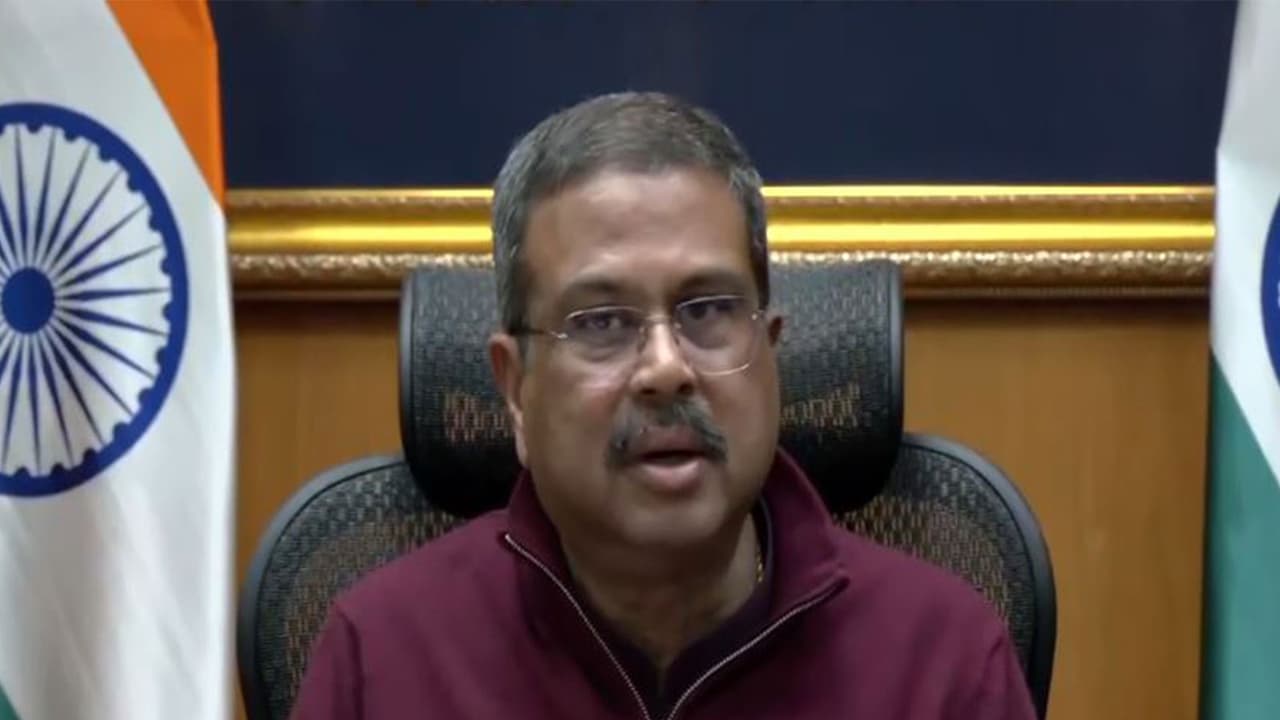
The Education Ministry will directly fund centrally funded HEIs under the Viksit Bharat Shiksha Adhishthan Bill, 2025. This separates funding from regulation per NEP 2020, with funds linked to institutional performance for transparency.
Education Ministry to Directly Fund HEIs Under New Bill
The Ministry of Education will directly disburse funds to centrally funded higher educational institutions under the proposed Viksit Bharat Shiksha Adhishthan Bill, 2025, the Ministry said.

Under the proposed framework, the function of grant disbursal will be separated from bodies responsible for academic standard setting, regulation and accreditation, in line with the National Education Policy (NEP) 2020. The Viksit Bharat Shiksha Adhishthan Bill, 2025, was introduced in the Lok Sabha by Union Education Minister Dharmendra Pradhan on Monday and has been referred to a Joint Parliamentary Committee (JPC) for further examination.
Performance-Based Funding and Transparency
As per the ministry, grants to Central Universities, which are currently routed through the University Grants Commission (UGC), will be ensured through mechanisms devised by the Ministry of Education, while Institutions of National Importance (INIs) will continue to receive funds directly from the government.
The Ministry of Education said feedback from the proposed Regulatory Council on the institutional performance of higher educational institutions (HEIs) will be the major factor in deciding the quantum of funds to be distributed, as the government seeks to ensure transparency, accountability and efficient utilisation of public funds. "To ensure transparency and public accountability, it is necessary to take a holistic view while disbursing grants to higher educational institutions," the Ministry said.
Autonomy for Institutions of National Importance
The Ministry clarified that Institutions of National Importance will continue to enjoy their existing autonomy under the proposed framework. "The current level of autonomy accorded to the Institutions of National Importance shall be upheld. Such institutions will, however, be required to place certain institutional data within the regulatory system, which will help in setting higher benchmarks for quality and standards in higher education," it said.
Unified Regulatory Framework to Replace UGC, AICTE
The funding changes form part of a broader overhaul of the higher education regulatory architecture envisaged under the Bill, which seeks to align India's education system with global academic standards while advancing the vision of the NEP 2020. The policy had called for a fundamental restructuring of the regulatory system, including a clear separation of funding, regulation, accreditation and standard-setting functions.
The Bill provides for the establishment of the Viksit Bharat Shiksha Adhishthan as an apex body, supported by three independent Councils: the Viksit Bharat Shiksha Manak Parishad for standards, the Viksit Bharat Shiksha Viniyaman Parishad for regulation, and the Viksit Bharat Shiksha Gunvatta Parishad for accreditation. It also proposes repealing the UGC Act, 1956, the AICTE Act, 1987 and the NCTE Act, 1993, bringing all higher educational institutions under a unified regulatory framework.
The Regulatory Council's public portal will mandate disclosure of governance, financial, academic and institutional performance data by HEIs, which will also serve as the basis for accreditation. The Ministry said this integrated approach would simplify compliance, enable faceless and technology-driven regulation, and foster trust-based governance.
The Bill has been introduced under Entry 66 of the Union List of the Constitution, which deals with coordination and determination of standards in institutions for higher education and research, and aims to expand access, improve quality and promote innovation across India's higher education ecosystem. (ANI)
(Except for the headline, this story has not been edited by Asianet Newsable English staff and is published from a syndicated feed.)