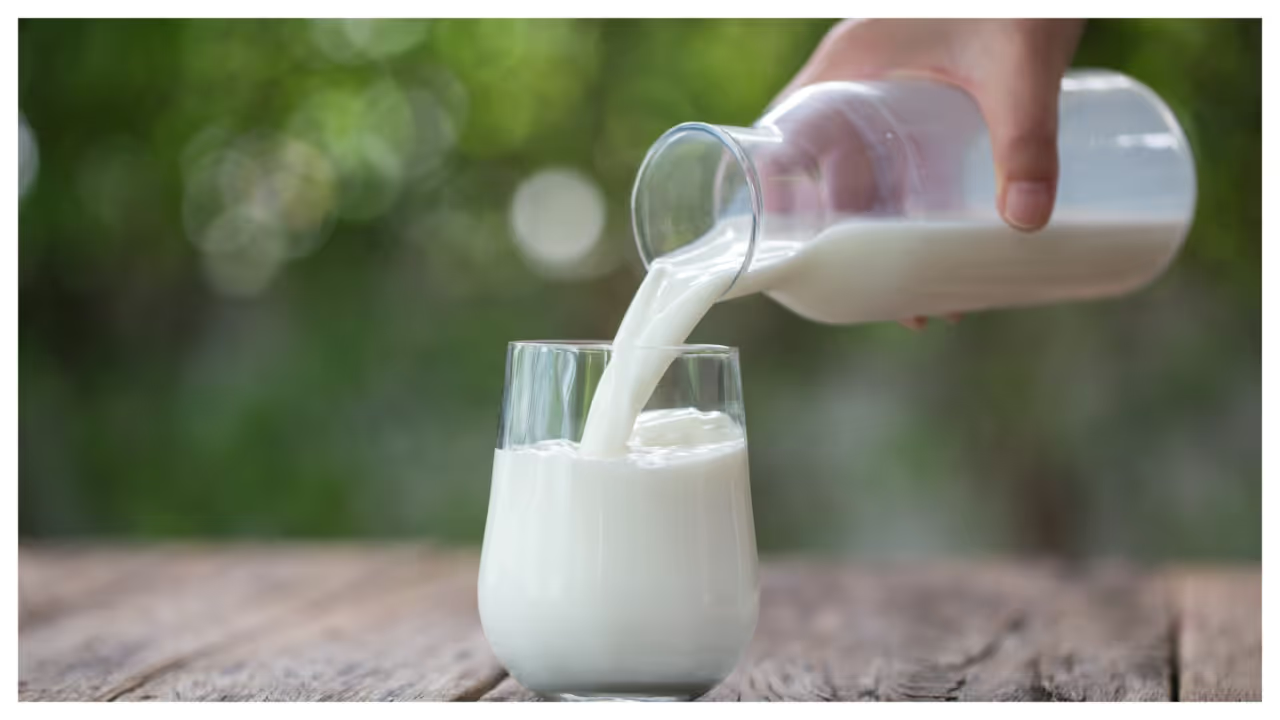
Government has confirmed that milk supply and prices in India remain stable despite West Asia crisis. There is no shortage of fuel, gas or packaging materials for dairy sector. Milk production, processing and delivery continue smoothly. Officials are monitoring situation and have taken steps like ensuring LPG supply and launching a tracking portal.
The government has said that milk and dairy products are available across India without any shortage. Prices have also remained stable, even as tensions continue in West Asia. Officials confirmed that the dairy sector has not faced any major problems in supply, production or distribution during this period.

Milk supply remains smooth across the country
According to the Department of Animal Husbandry and Dairying, milk collection, processing and delivery have continued normally. Officials said:
- Milk supply has not been interrupted
- Dairy products are available in markets
- Payments to farmers are being made on time
This has helped maintain stability in both supply and pricing.
Related Articles

India’s strong dairy base
India is the world’s largest producer of milk. During 2024-25, the country produced about 247.87 million tonnes of milk. This large production capacity plays a key role in ensuring that supply remains steady, even during global disruptions.
Regular monitoring by the government
The government is closely watching the situation. A meeting was held with state milk federations and unions across India to review the impact of the West Asia crisis. Officials said they are:
- Holding regular discussions with stakeholders
- Tracking supply levels
- Taking quick action if needed
This active monitoring has helped prevent problems before they arise.
Fuel supply secured for dairy plants
Fuel is very important for dairy processing plants. Without it, milk cannot be processed or transported properly.
Officials said there is no shortage of fuel or gas for the dairy sector.
A government order issued on April 8, 2026, ensured that dairy plants receive 70% of their usual LPG supply. This has helped avoid any disruption in operations.
Shift towards piped natural gas
To reduce dependence on LPG, dairy companies have been advised to switch to piped natural gas wherever possible. This step aims to:
- Make fuel supply more stable
- Reduce risk during global crises
- Support long-term planning
- No shortage of packaging materials
Plastic packaging is essential for milk products like packets and containers. Officials confirmed that:
- There is no shortage of packaging material
- Supplies are stable across the country
The government has worked with the Ministry of Petroleum and Natural Gas to solve earlier concerns.
Raw materials also available
Key materials like polypropylene and polystyrene, used to make plastic packaging, are also available in sufficient quantity. The government is working closely with suppliers to ensure smooth delivery of these materials to dairy companies.
New portal to track supplies
A special online portal was launched on March 30, 2026. This platform helps monitor:
- Milk availability
- Fuel supply
- Packaging material
State federations and milk unions are connected to this system, allowing real-time tracking and quick response to any issue.
Support for exports
The government has also taken steps to support dairy exports. A simpler animal quarantine clearance process was introduced on March 25, 2026. This makes it easier for exported goods to return to Indian ports if needed. This step ensures that exporters do not face unnecessary delays.
Why prices have stayed stable
Several reasons have helped keep prices steady:
- Strong milk production in India
- Smooth supply chain operations
- Adequate fuel and packaging availability
- Regular government monitoring
- Quick action on emerging issues
Together, these factors have prevented any price rise or shortage.
Despite global tensions, India’s dairy sector has remained stable and reliable. Milk supply continues without interruption and prices have not increased.
The government’s timely action, combined with strong production and planning, has helped maintain this balance.
(With inputs from agencies)