
Jairam Ramesh says the new VB-G-RAM-G Bill has altered MGNREGA's fundamental character, taking away rural jobs. The Congress party will meet on December 27 to finalize an action plan for a nationwide movement against the legislation.
Congress Alleges Change in MGNREGA's 'Fundamental Character'
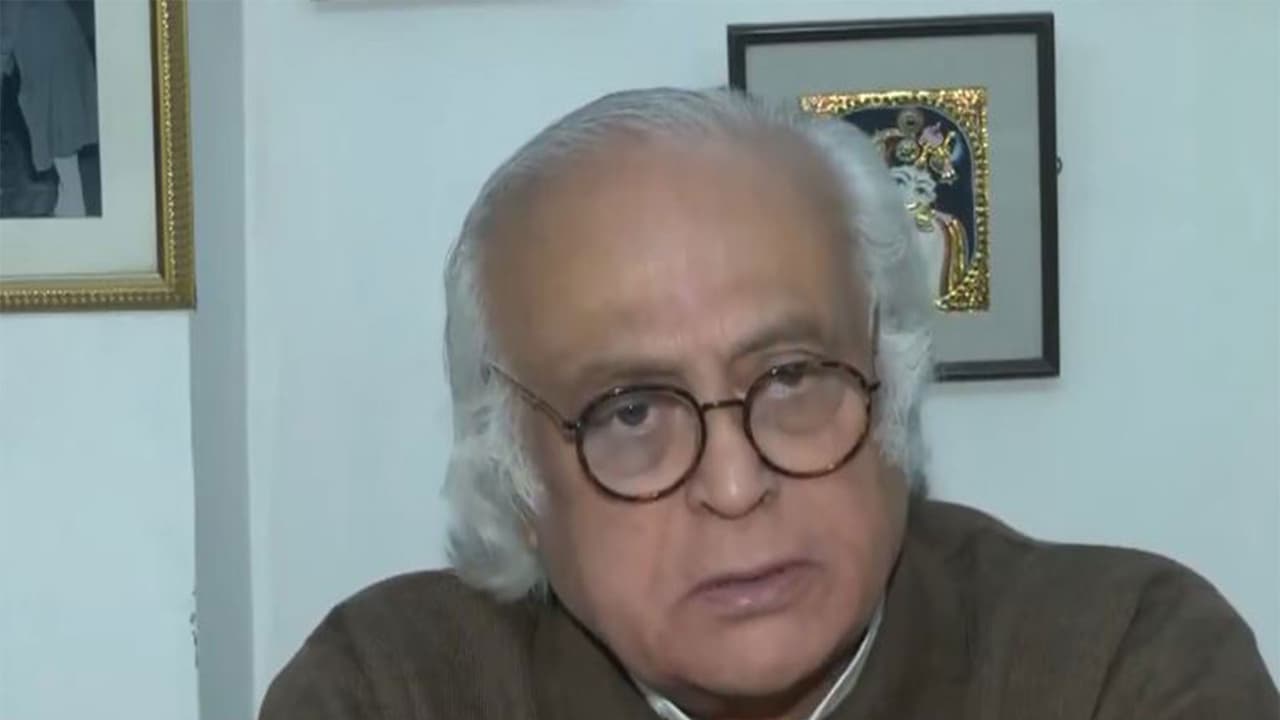
Congress leader Jairam Ramesh on Sunday said the fundamental character of MGNREGA has been changed, announcing that the Congress Working Committee meeting scheduled for December 27 will finalise an action plan for a nationwide movement across all states against the Viksit Bharat Guarantee for Rozgar and Ajeevika Mission (Gramin) (VB-G-RAM-G) Bill passed in Parliament.

Speaking to ANI, Ramesh said the new legislation has taken away employment opportunities from rural, deprived and exploited sections of society. "The fundamental character of MGNREGA has been changed; the basic structure of the scheme has been altered. The employment that was being provided to rural, deprived, and exploited people has been taken away," he said.
He explained that MGNREGA was based on three key principles: providing employment, creating local infrastructure through employment to ensure sustainable livelihoods, and decision-making at the level of the Gram Panchayat. Ramesh alleged that the new law shifts this authority to the Centre. "Previously, this was decided by the Gram Panchayat, but now the central government will decide who, where, and when employment will be provided," he said.
Accusations of Ideological Bias
Ramesh further accused the BJP of acting out of ideological bias. "They hate Mahatma Gandhi's name, and they hate the laws enacted during the Congress regime. I don't understand why they rushed this through," he said, adding that the law was enacted without consultations with state governments. According to him, the move would further strain the financial condition of states.
He also endorsed Congress Parliamentary Party chairperson Sonia Gandhi's remarks, saying, "Sonia Gandhi's statement is correct that a bulldozer has been run over Parliament."
Nationwide Agitation Planned
Furthermore, the Congress leader said the party raised its objections during the parliamentary process. "We raised issues, we asked questions in the Parliament. We participated in the debate, and we raised objections. We presented all our concerns and objections in detail," he said.
Ramesh also indicated that the Congress is preparing to launch a nationwide agitation against the legislation. He said a Congress Working Committee meeting is scheduled for December 27, where the party will discuss the nature of the proposed movement. "We will discuss what kind of mass movement will be launched regarding this issue, and an action plan will definitely emerge. This will be a national movement across all states," he said.
'More Than Just A Name Change'
Calling the issue one of principle and legal rights, Ramesh said the changes go beyond renaming the scheme. "You have changed the fundamental character itself. You have changed the very face of it," he said, alleging a contradiction between the government's rhetoric on decentralisation and its actions.
"On the one hand, the Prime Minister talks about the Gram Panchayat. But what do they do in practice regarding centralisation? There is a vast difference between their words and their actions," he added.
About the New VB-G-RAM-G Bill
During the recently concluded winter session, the Parliament passed the Viksit Bharat Guarantee for Rozgar and Ajeevika Mission (Gramin) (VB--G RAM G) Bill, with the Rajya Sabha approving the legislation hours after the Lok Sabha passed it. The Bill guarantees 125 days of wage employment per rural household, up from the existing 100 days, for adult members willing to undertake unskilled manual work.
As per Section 22, the fund-sharing pattern between the Centre and the states will be 60:40, while for the Northeastern states, the Himalayan states, and the Union Territories, including Uttarakhand, Himachal Pradesh, and Jammu and Kashmir, it will be 90:10. Section 6 of the Bill allows state governments to notify in advance a period aggregating up to 60 days in a financial year, covering peak agricultural seasons such as sowing and harvesting. (ANI)
(Except for the headline, this story has not been edited by Asianet Newsable English staff and is published from a syndicated feed.)