
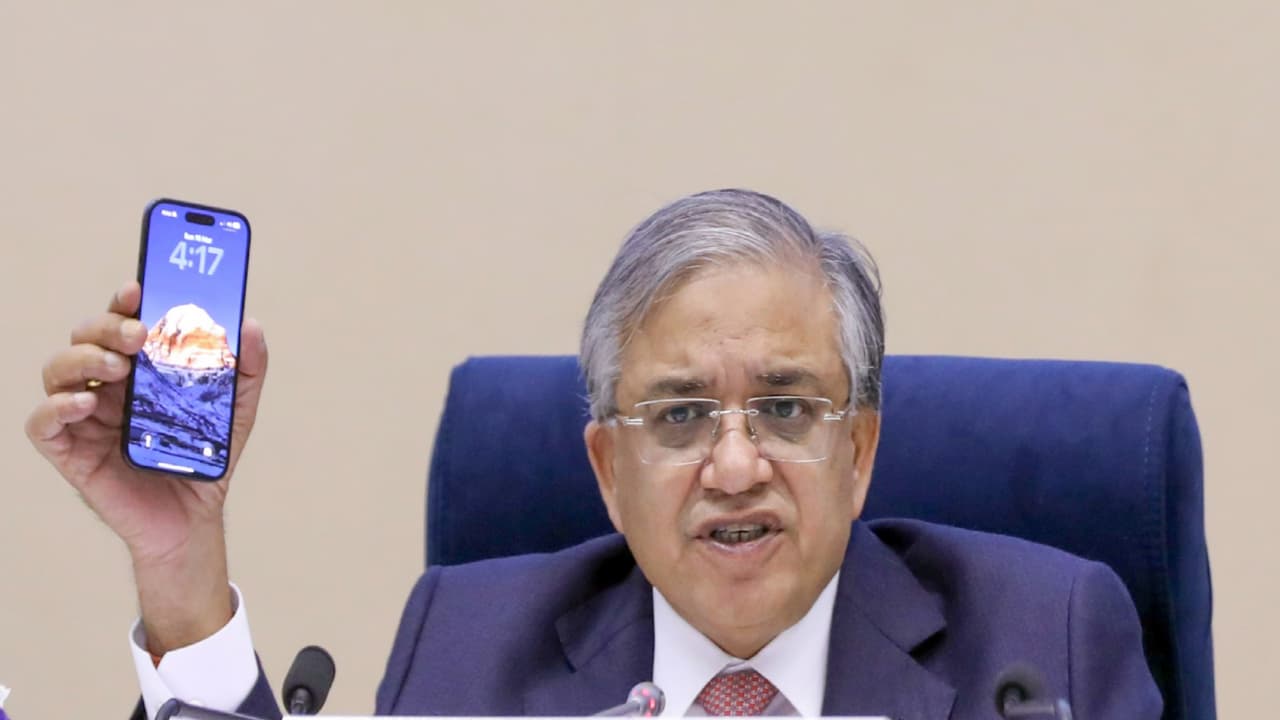
ECI announced the poll schedule for 4 states and 1 UT, enforcing the Model Code of Conduct. CEC Gyanesh Kumar detailed measures for fair elections, including enforcement agency directives, social media monitoring, and transparency in vote counting.
The Election Commission of India (ECI) on Sunday announced the election schedule for four states and one Union Territory, resulting in the immediate implementation of the Model Code of Conduct (MCC) across the poll-bound region.

Addressing a press conference in the national capital, Chief Election Commissioner Gyanesh Kumar emphasised that actions taken before the MCC came into effect remain under the prerogative of the respective state governments, but all activities from now on must comply with it. "I'd like to make clear that the model code of conduct is applicable from now onwards. So actions taken prior to the model code of conduct are the prerogative of the concerned government. But now onwards, the model code of conduct shall be applicable," Gyanesh Kumar said.
Measures for Fair and Inducement-Free Elections
He added that nearly 24 enforcement agencies have been instructed to ensure elections are free from inducements and violence. District Collectors and Superintendents of Police have been directed to act impartially and uphold the rule of law. Election observers will visit the states, with their details made public, and fake news on social media will be strictly monitored with action taken where necessary. "Clear directions have been issued to all the enforcement agencies, nearly 24 of them, that elections in these states and UT shall be inducement-free and violence-free. Directions have been issued to the collectors and the SPs that they have to act with complete impartiality and enforce the rule of law. The observers will be visiting the states, their details should be made public, and any fake news on social media should be strictly monitored and necessary action taken," CEC said.
ECI Bolsters Transparency with New Protocols
To improve transparency, presiding officers at each polling station will update the number of votes cast every two hours. At the end of polling, the final voting percentage from Form 17C will be displayed immediately. Booth-level officers have been issued identity cards for easy recognition by voters. Additionally, postal ballots will be counted two rounds before votes recorded in Electronic Voting Machines (EVMs). "The presiding officers of every polling station shall input the number of votes cast after every two hours to ensure that voting percentages which are being relayed through the media to the public at large is by and large accurate and at end of the poll whatever the figures are there in 17C accordingly the percentage is also displayed without any further delay. All the booth-level officers have been given identity cards so that our electors and the households can identify them easily... In another initiative to enhance transparency, the postal ballots will be counted two rounds before the EVMs," CEC said.
All election-related statistics will be accessible via the ECI-Net system within 72 hours of counting. In case of discrepancies between Form 17C and EVM counts, the Voter Verifiable Paper Audit Trail (VVPAT) slips for the respective EVM will be counted. Losing candidates may request EVM and VVPAT verification after paying the prescribed fee. "Similarly, all the statistics relating to the elections shall be available through ECI-Net itself within 72 hours of counting being over. In case of any difference, because of typographical errors between 17C, which is given at the polling stations, to all the polling agents who are present and the EVM count, if there is a difference, the VVPATs of that EVM shall be counted. Similarly, after the counting is over, the losing candidate can prefer, after prescribed payment of fee, checking of the EVM along with VVPAT counting," said CEC.
Specific Directives for West Bengal Polls
Regarding West Bengal elections, which will now be held in two phases instead of eight, the Commission determined this reduction was necessary for convenience and efficiency. "With regards to the West Bengal elections to be held in two phases instead of eight phases earlier, the Commission has held detailed deliberations and in its considered opinion, it was found necessary to reduce the number of phases and bring it down to an extent where it is convenient for everybody," he said.
The CEC also addressed past election violence, stating that the list of police officers involved has been obtained and appropriate action will be taken. Concerning the supplementary electoral list, under the orders of the Supreme Court and directions of the Calcutta High Court, new entries will be added to the existing electors as they are finalised. "With regards to the police officers who were involved in the violence in earlier elections, the list has been sought, as is known to the media during our visit to West Bengal, and necessary action as per law shall be taken... With regards to the supplementary list, as per the orders of the Supreme Court, the learned judges working under the directions of the High Court of Calcutta would be bringing out this supplementary list and as and when the supplementary list of names are coming out, they shall be included in addition to the existing electors," said Kumar.
Election and Counting Dates Announced
In West Bengal, polling will be conducted in two phases on April 23 and April 29, while Kerala and Assam will vote in a single phase on April 9. Tamil Nadu will go to the polls on April 23, and voting in Puducherry will also be held on April 9. Counting of votes in all four states and Puducherry will be done on May 4, the CEC announced. (ANI)
(Except for the headline, this story has not been edited by Asianet Newsable English staff and is published from a syndicated feed.)