
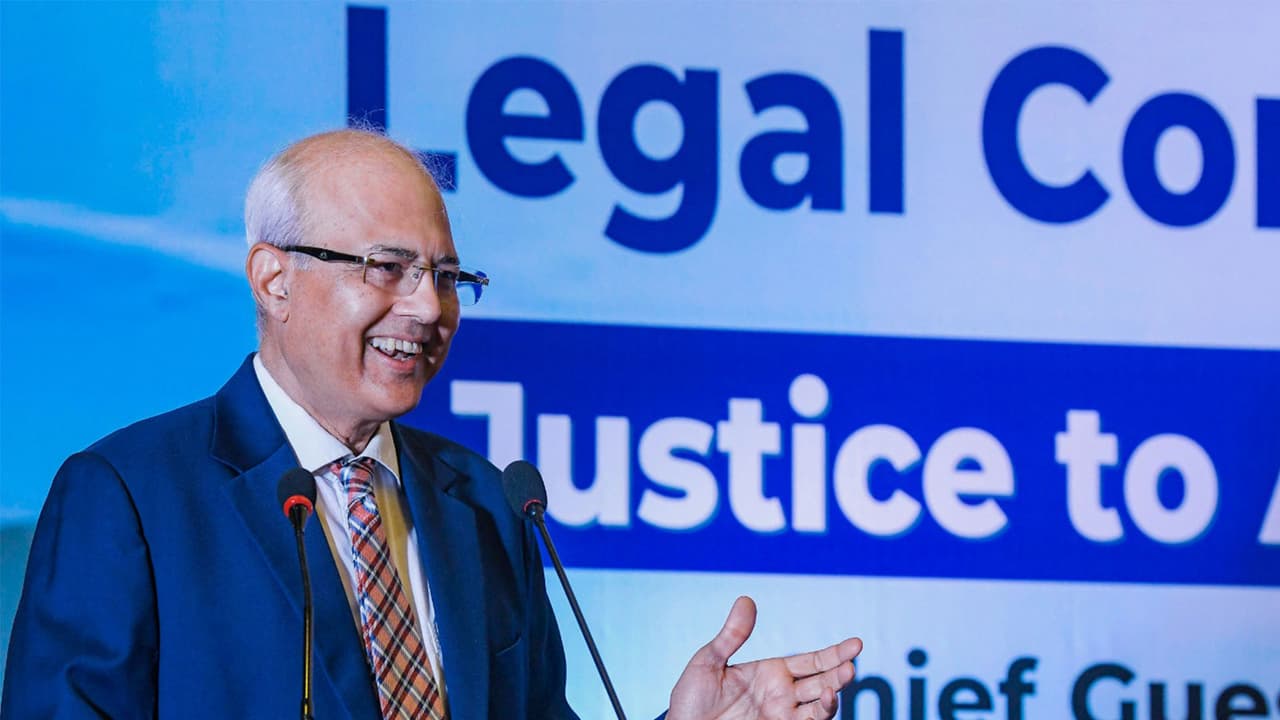
Justice Manmohan urged for constructive criticism to improve the justice system, highlighting judicial pendency and promoting mediation as a solution. The conclave focused on making justice accessible, with experts backing mediation and technology.
Emphasising the need for constructive criticism and meaningful dialogue within the legal system, Justice Manmohan on Saturday said that pointing out shortcomings in the justice delivery system should not be seen as condemnation but as an effort to improve institutional functioning. Addressing the SILF-SLP Legal Conclave and Awards 2026, he underlined that fostering healthy debate on emerging legal issues is essential for strengthening the justice system and ensuring its evolution in line with contemporary challenges.

Justice Manmohan lauded the Society of Indian Law Firms (SILF) for elevating the quality of discourse within both society and the courts, and stressed the importance of continuous engagement with academia, including international scholars. He urged Indian law firms to move beyond a narrow domestic perspective and adopt a global outlook, treating the world as their professional canvas. He also described technology as a "double-edged weapon", cautioning that while it can be a powerful enabler, its misuse could prove detrimental, thereby necessitating a balanced and thoughtful approach.
Rethinking Arbitration and Promoting Mediation
Highlighting the persistent challenge of judicial pendency, Justice Manmohan called for introspection within the legal community, particularly questioning whether arbitration, once seen as a solution, has itself become part of the problem. He pointed to mediation as a promising alternative, noting its success in resolving matrimonial disputes and urging wider debate on its potential to ease the burden on courts.
Integrating Technology and Mediation for Efficiency
The conclave, organised by SILF in collaboration with the Society of Legal Professionals (SLP) under the theme "Justice to All Accessible and Affordable," brought together leading voices from the legal fraternity to deliberate on reforms aimed at addressing over six crore pending cases in India. During the event, Chetan Sharma highlighted the transformative role of mediation and technology in achieving a more efficient justice delivery system. He stressed that combining mediation with technological tools, including AI, could significantly reduce pendency and contribute to the vision of a "Viksit Bharat," while maintaining that human intelligence must remain central to decision-making.
Key Pillars for a Future-Ready Justice System
The conclave also witnessed discussions on reforming legal education, curbing excessive reliance on technology among youth, and encouraging Indian law firms to adopt global best practices. Experts collectively emphasised that mediation, technological integration, and improved legal training will be key pillars in building a more accessible, affordable, and future-ready justice system.
(Except for the headline, this story has not been edited by Asianet Newsable English staff and is published from a syndicated feed.)