
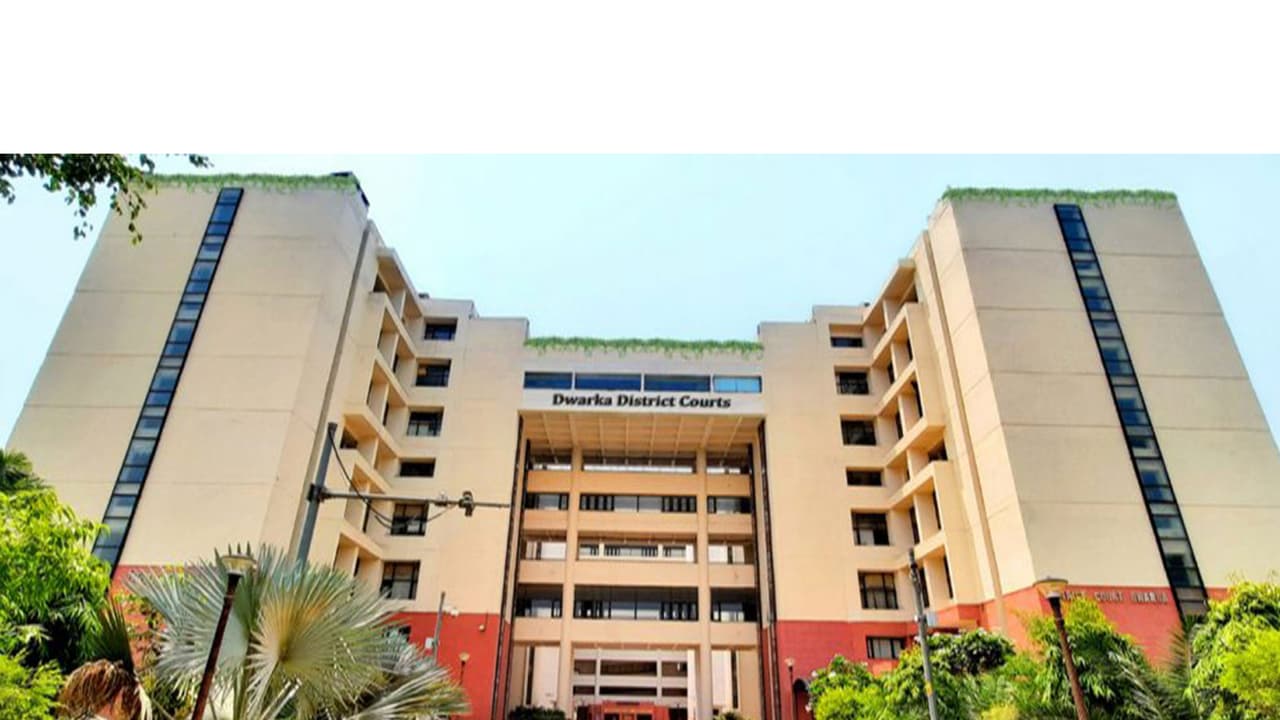
Dwarka court rejected sub-contractor Rajesh Kumar's bail in the Janakpuri biker death case, citing the initial investigation stage and the gravity of a life lost. The court prioritized a fair, uninfluenced investigation over individual liberty.
Dwarka court dismissed the regular bail of the plea of sub-contractor Rajesh Kumar, who has been arrested in the Biker's death case of Janakpuri. The court said that there is a loss of human life, and the investigation is at an initial stage.

Bail Denied to Uphold Investigation Integrity
While rejecting the bail plea, the court held that, considering the totality of facts and circumstances, this court is of the view that no ground for the grant of regular bail is made out at this stage. Judicial Magistrate First Class (JMFC) Harjot Singh Aujla dismissed the bail plea of Rajesh Kumar.
"In cases involving loss of human life due to alleged negligence in public works, the Court must balance individual liberty with societal interest and the need for a fair and un-influenced investigation," the court said in the order.
" Accordingly, the prayer for grant of regular bail to accused Rajesh Kumar is hereby dismissed at this stage, "JMFC Harjot Singh Aujla said in the order passed on February 11.
Court to Probe Illegal Detention Allegations
The court has kept the matter relating to the alleged illegal detention of the accused pending and directed the investigating officer/SHO, PS Janakpuri, to file a comprehensive reply, along with relevant CCTV footage of PS Janakpuri for the period 06.02.2026 to 08.02.2026, on the next date of hearing for consideration of the plea regarding illegal custody.
In view of the contention, this Court deemed it appropriate to call for the CCTV footage of PS Janakpuri to ascertain whether the accused was indeed detained prior to the time reflected in the arrest memo and whether any statutory or constitutional safeguards were violated. The matter has been listed for hearing on February 16.
Arguments from Defence and Prosecution
Defence Argues Illegal Arrest and Lack of Intent
During the hearing, counsel for the accused argued that the arrest of the accused was illegal and unconstitutional. It was also submitted that the accused was allegedly apprehended/detained on 06.02.2026; however, he was produced before the concerned Court only on 08.02.2026, thereby violating the mandate of Article 22(2) of the Constitution of India as well as Cr.P.C (now BNSS), which requires production within 24 hours of arrest.
It was argued that such illegal detention vitiates the custody and the accused deserves to be released.
Counsel for the accused also submitted that the incident in question arose from an accident relating to civic excavation work and that there was no intention or knowledge attributable to the accused. It was further contended that the accused has no prior criminal antecedents and is a permanent resident, and therefore does not pose a flight risk.
Prosecution Highlights Gravity of Offence
On the other hand, the Additional Public Prosecutor (APP) opposed the bail application on the grounds that the allegations are grave in nature, wherein a 25-year-old boy lost his life after falling into an unmanned and unsecured excavation pit. It was also submitted that the investigation is at a nascent stage, several witnesses are yet to be examined, documents relating to the excavation work, safety compliance, contractual obligations and supervisory responsibilities are yet to be scrutinised. He apprehended that, if released, the accused may influence witnesses, tamper with documentary evidence, and abscond to evade the process of law.
Court's Rationale for Dismissal
While rejecting the bail plea, the court observed, "The investigation is admittedly at an initial stage. The IO is in the process of collecting relevant records pertaining to permissions, safety compliance, barricading arrangements, deployment of personnel and the responsibility matrix.
The court also noted that the possibility of the accused influencing material witnesses, particularly local residents, labourers or officials associated with the project, cannot be ruled out at this juncture.
Furthermore, documentary evidence concerning the execution of civic work is susceptible to alteration or manipulation, especially when the investigation is yet to crystallise the chain of responsibility, the court said. (ANI)
(Except for the headline, this story has not been edited by Asianet Newsable English staff and is published from a syndicated feed.)