Iran’s embassy deletes posts thanking “India” and “Kashmir” after Pakistan-linked backlash, sparking outrage in India as geopolitics overshadows emotional aid from Jammu & Kashmir.
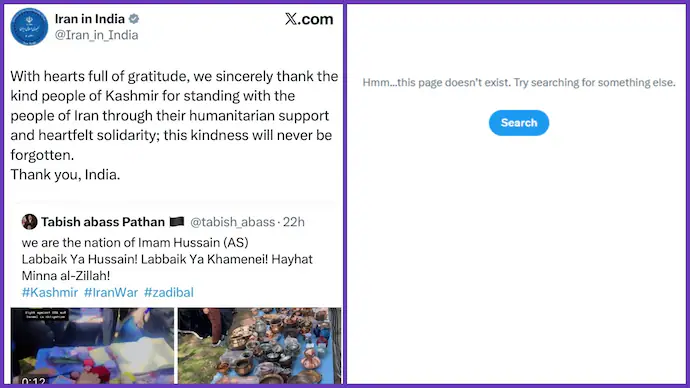
What began as a show of gratitude has quickly spiralled into a diplomatic embarrassment. Amid the raging war in the Middle East, the Iranian Embassy in India deleted multiple posts on X that explicitly thanked “India” and the “kind people of Kashmir” for humanitarian aid—after reportedly facing a barrage of criticism, largely from Pakistan-based users.

Also read: What Is ‘Energy Lockdown’? Iran War Triggers Global Power Crisis | Explained
Related Articles

One of the now-deleted posts had stated: “With hearts full of gratitude, we sincerely thank the kind people of Kashmir for standing with the people of Iran through their humanitarian support and heartfelt solidarity; this kindness will never be forgotten. Thank you, India.”
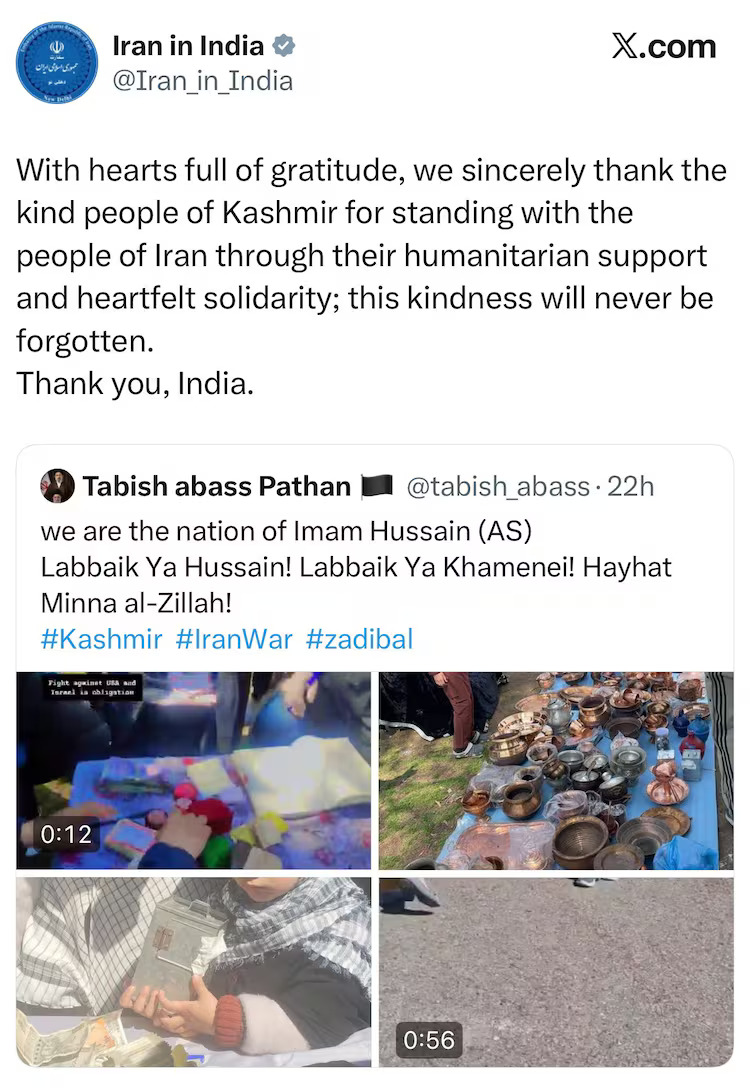
Another, equally emotional, highlighted a widow’s sacrifice: “A respected sister from Kashmir donated the gold kept as a memento of her husband, who passed away 28 years ago, with a heart full of love and solidarity for the people of Iran. Your tears and pure emotions are the greatest source of comfort for the people of Iran and will never be forgotten.”
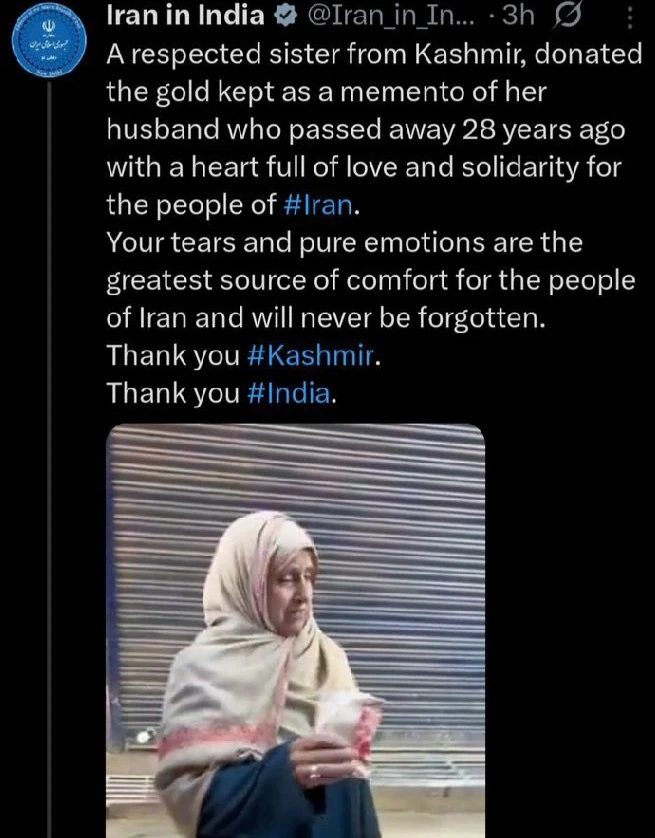
Within hours, both posts were gone—without explanation.
Pakistan pressure, Tehran response
The trigger appears clear.
Pakistan-based social media users flooded the embassy’s posts, objecting to Kashmir being described as part of India. Many insisted the region is “disputed” and demanded Iran correct its wording.
Soon after, the embassy blinked.
References to “India” and “Kashmir” began disappearing—not just from deleted posts, but even from reposted content.
A video that earlier ended with “Thank you #Kashmir. Thank you #India” was re-uploaded with a stripped-down caption:
“We will never forget your kindness.”
No India. No Kashmir.
Human stories caught in geopolitical crossfire
Lost in the diplomatic manoeuvring are the very people who triggered the gratitude in the first place.
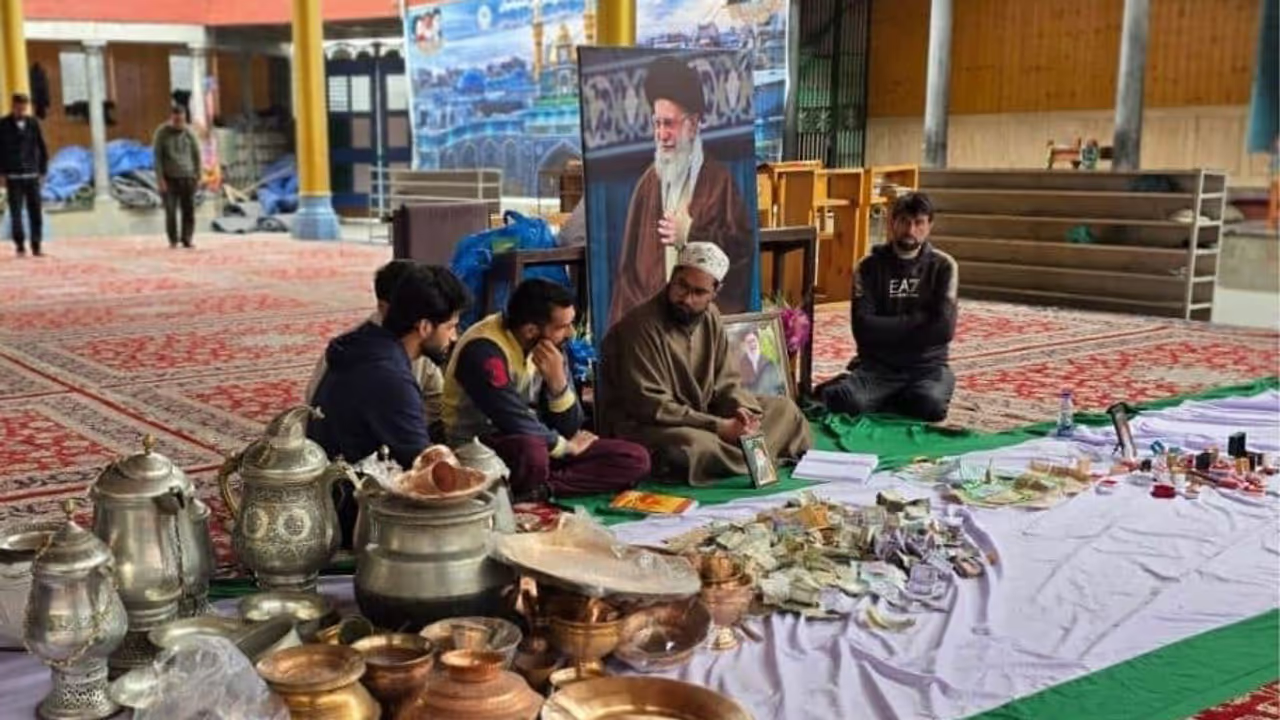
Across Jammu and Kashmir, donation drives saw an outpouring of support—cash, jewellery, utensils, even livestock—especially around Eid-ul-Fitr.
Women parted with personal valuables. Children donated savings. And in one powerful moment, a widow gave away gold she had preserved for nearly three decades.
These weren’t symbolic gestures—they were deeply personal acts of solidarity.
Yet, in the end, even their acknowledgment became politically negotiable.
Also read: US Global Influence Has Collapsed, Diplomatic Overtures a Facade: Iran
India reacts, questions mount
Back home, the deletions have sparked sharp reactions.
Several Indian users questioned why references to India were quietly dropped, with some calling for the Ministry of External Affairs to step in.
The silence from the Iranian side has only added to the unease.
A familiar pattern in India-Iran ties
This isn’t the first time Tehran’s messaging on Kashmir has stirred discomfort.
Iran’s leadership has, in the past, commented on Kashmir and broader issues concerning Muslims in India—remarks that have drawn strong responses from New Delhi.
In 2019, following the revocation of Jammu and Kashmir’s special status, Iran’s then Supreme Leader, Ayatollah Ali Khamenei, publicly voiced concern over the condition of Muslims in the region—prompting India to respond sharply by summoning the then Iranian Ambassador, Ali Chegeni.
The pattern didn’t stop there. In 2020, Khamenei also weighed in on the Northeast Delhi riots.
More recently, in 2024, he again referred to Muslims in India while speaking about what he described as the “repression of the Ummah.”
At the same time, both countries have maintained working ties, particularly in energy and regional connectivity.
But episodes like this underline a recurring tension: public posturing versus strategic partnership.
Pakistan steps up diplomacy amid West Asia tensions
Meanwhile, Pakistan PM Shehbaz Sharif has ramped up diplomatic outreach amid the escalating crisis, speaking with Mohammad bin Salman and reiterating Islamabad’s support for Riyadh while pushing for de-escalation.
“I also briefed His Royal Highness on Pakistan’s diplomatic outreach efforts for regional peace and stability. We agreed to remain in close coordination,” Sharif said, adding, “I stressed the urgent need for de-escalation".
According to the Saudi Press Agency, he “reiterated Pakistan's full support and commitment to standing firmly with the Kingdom against repeated Iranian attacks threatening its security and sovereignty.”
The outreach comes as Pakistan positions itself as a mediator—offering to host US-Iran talks, facilitating backchannel communication, and engaging key players including the UAE, UK and China—amid a widening conflict triggered after joint US-Israel strikes on Iran and Tehran’s retaliation across the Gulf.