
In Himachal's Mandi district, Pahadans Village pioneers a community-driven tourism model. The initiative creates livelihoods, especially for women, turning the serene getaway into a powerful example of self-reliance and rural development.
Sometimes, the true identity of a beautiful place lies not just in its scenic views, but in the dreams of the people who live there. Nestled in the serene hills of Mandi district, Pahadans Village is emerging as a unique example where tourism goes beyond sightseeing, creating livelihoods, identity, and new opportunities for the local community.

With misty mountains, lush greenery, light drizzles, and charming wooden cottages, the village in Parwara initially appears to be a peaceful getaway. But a closer look reveals a deeper story--one driven by innovation, inclusion, and community participation.
A Vision for Rural Development
The initiative was started by Praveen Verma with a vision to make tourism a tool for rural development. "We first focused on building cottages, but our core idea was to connect local people with employment," said Verma. "Even today, most of the people working with us are women, and they are doing remarkable work. At present, more than 200 women are associated with us."
Her husband, Pankaj Singh, has been a constant support in this journey, helping turn the vision into reality. "We started with tourism, but in a way that begins from the village and runs on a completely sustainable model," he said. "The idea was to ensure inclusion of local people, especially providing jobs to women in the village."
Community-Driven Empowerment
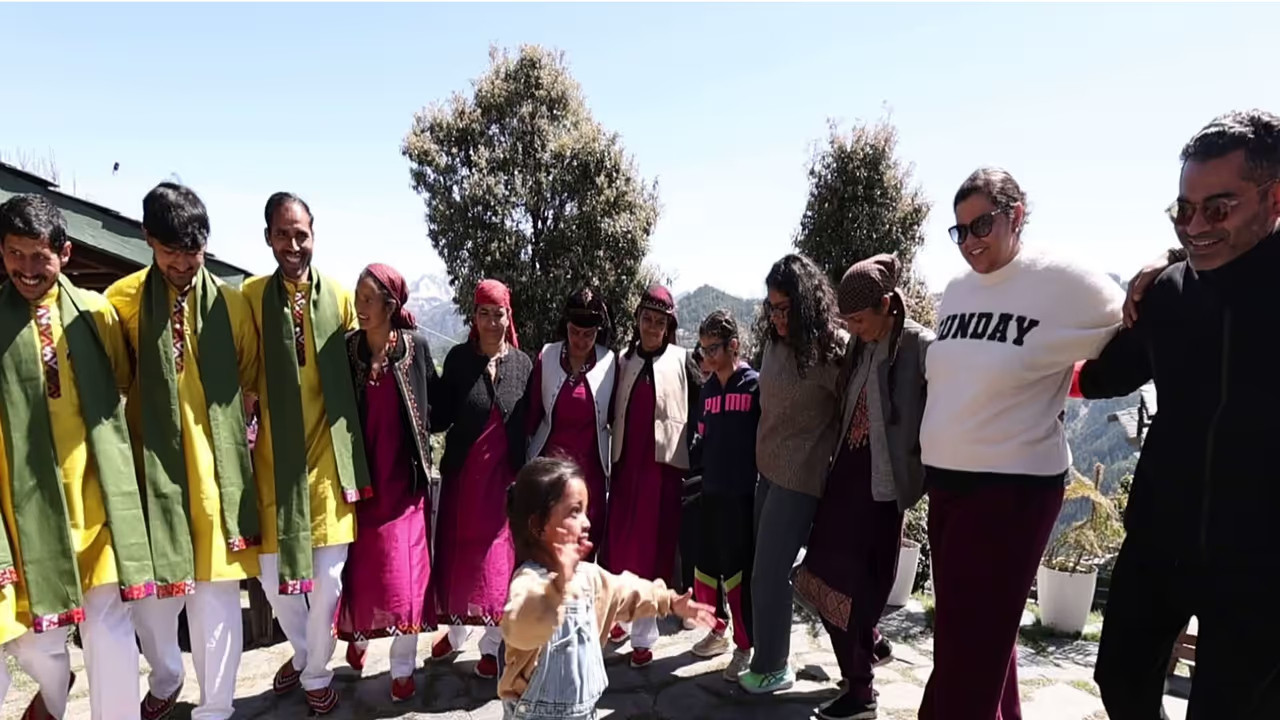
What sets Pahadans Village apart is its community-driven approach. The wooden cottages offer visitors a tranquil experience, while the hospitality is entirely managed by local residents. Women are actively engaged in organic farming, stitching, embroidery, and making woollen products--turning their skills into a source of income and identity.
Voices from the Village
Ekta, a co-founder associated with the initiative, shared how the journey has changed perceptions. "Earlier, my friends would ask if I really made these things by hand. I used to feel that creating something for yourself is a matter of pride," she said.
For many locals, the initiative has not only brought employment but also a sense of belonging. "Since Pahadans Village started, it feels like a family to us," said Sarla, an employee. "We have found good work here, and everyone is connected like a close-knit family."
Men in the village are also actively contributing through farming, construction, and tourism-related activities, making it a collective effort. "Since this began, there is no need to go outside or wander in search of work," said Motiram, another worker.
An Authentic Visitor Experience
For visitors, the experience goes far beyond scenic beauty. Authentic Himachali cuisine, prepared with local ingredients, offers a taste of tradition, while cultural elements like folk dance, bonfires, and the charm of the hills make every stay memorable. "My experience has been very good," said Agam, a visitor. "Even with limited resources, we get facilities comparable to a city. The journey itself, with landslides and mountain roads, adds to the adventure."
Today, Pahadans Village stands as a powerful example of how the right vision, local participation, and sustained effort can transform a small village into a thriving model of self-reliance. It shows that the future is not built only in cities sometimes; it begins in the quiet corners of the mountains, where nature, culture, and human aspiration come together.
(Except for the headline, this story has not been edited by Asianet Newsable English staff and is published from a syndicated feed.)