
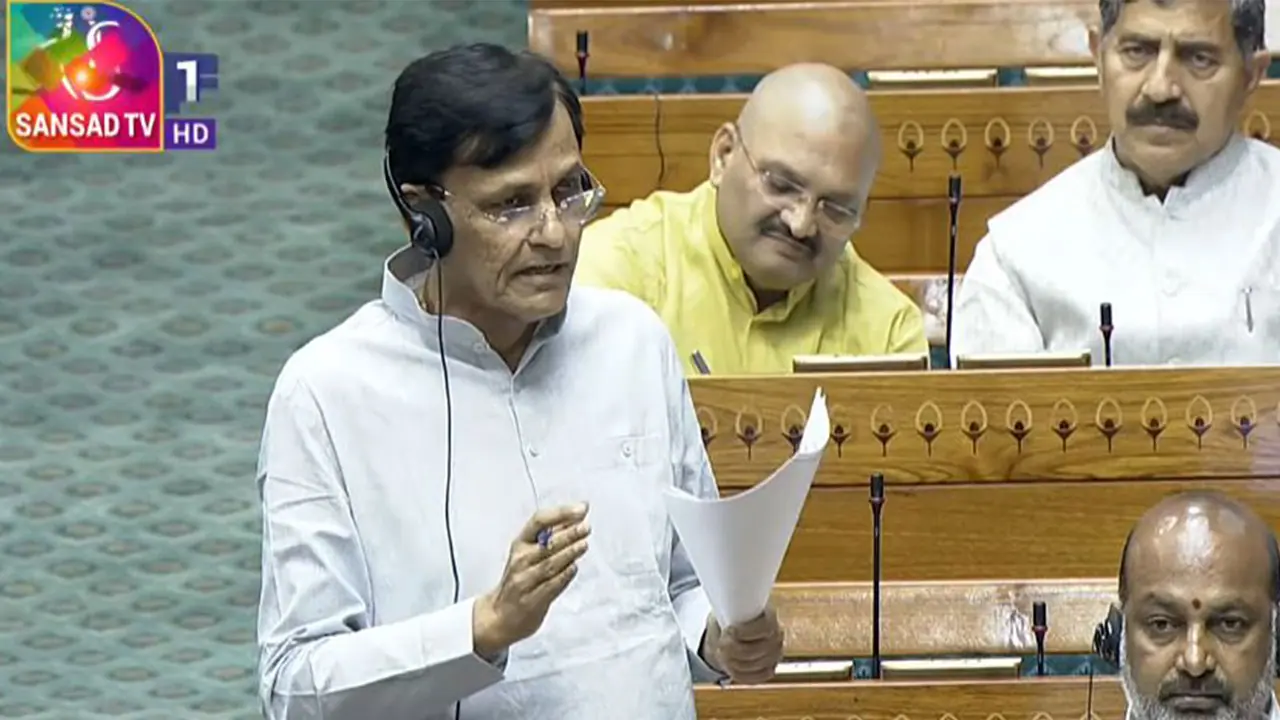
The Foreign Contribution (Regulation) Amendment Bill, 2026 was introduced in Lok Sabha by MoS Nityanand Rai to enhance transparency. Opposition members, including Manish Tewari and Pratima Mondal, fiercely opposed it, calling it 'draconian'.
Union Minister of State (MoS) for Home Affairs Nityanand Rai on Wednesday introduced The Foreign Contribution (Regulation) Amendment Bill, 2026, in Lok Sabha amid the ongoing budget session. The bill seeks to amend the Foreign Contribution (Regulation) Act, 2010, and is aimed at enhancing the transparency and accountability of foreign contributions in India.

During the proceedings, Nityanand Rai moved for the introduction of the Bill on behalf of Union Home Minister Amit Shah, emphasising that it was an essential amendment for ensuring service, transparency, and the national interest. The bill faced fierce opposition from several members.
Opposition Slams Bill as 'Draconian'
Congress MP Manish Tewari took a strong stance against it, claiming that the bill suffers from "excessive delegation of essential legislative functions". "The Bill enables wide and unguided executive control over property, including the provisional and permanent vesting of assets in a designated authority. This raises serious concerns under Article 300A of the Constitution. The Bill concentrates adjudicatory, executive, and quasi-judicial powers in the same authority, undermining the principles of natural justice and separation of powers," Tewari further argued. "The provisions enabling the takeover and disposal of assets, even where partly funded by non-foreign sources, are manifestly disproportionate and may have a chilling effect on civil society activity, undermining the constitutional guarantee under Article 19(1)(c)," he said.
Trinamool Congress (TMC) MP Pratima Mondal also expressed her objection, calling the bill "draconian" for centralising excessive authority and undermining the federal balance. "This is a draconian Bill. It centralises disproportionate authority in the executive, weakening institutional checks and federal balance. The requirement of prior approval from the Union Government before initiating criminal proceedings under the Act introduces an element of executive filtering and unchecked discretion. Thus, I oppose the introduction of this Bill," she said.
Government Defends Bill's Intentions
In response to the opposition's concerns, Nityanand Rai reaffirmed that the bill's provisions were intended to improve the regulation of foreign contributions, making them more transparent and accountable. "Honourable Chairperson, regarding this amendment bill, I would like to say very briefly that I felt this was such an essential amendment for service, transparency, and the national interest that it would not be opposed. During the implementation of the Act, it was felt that there is some lack of clarity in certain provisions, which led to administrative difficulties," he stated.
Responding to Manish Tewari's objections, Rai said, "The policy for the management and disposal of assets is defined within the Act itself. This Bill distinguishes between temporary and permanent vesting, giving organisations a chance to regularise their status."
He further defended the bill, and responded to Pratima's objections, saying, "This is only 'dangerous' for those whose intentions are flawed--those who take foreign funds for illegal conversions, for fraud, or for personal gain. This Modi government will not tolerate anyone working against the spirit of the Constitution and the national interest. This Bill is meant to make the use of foreign contributions transparent and accountable."
However, despite these objections, the Chair, Krishna Prasad Tenneti, put the motion to a voice vote, and the bill was introduced. (ANI)
(Except for the headline, this story has not been edited by Asianet Newsable English staff and is published from a syndicated feed.)