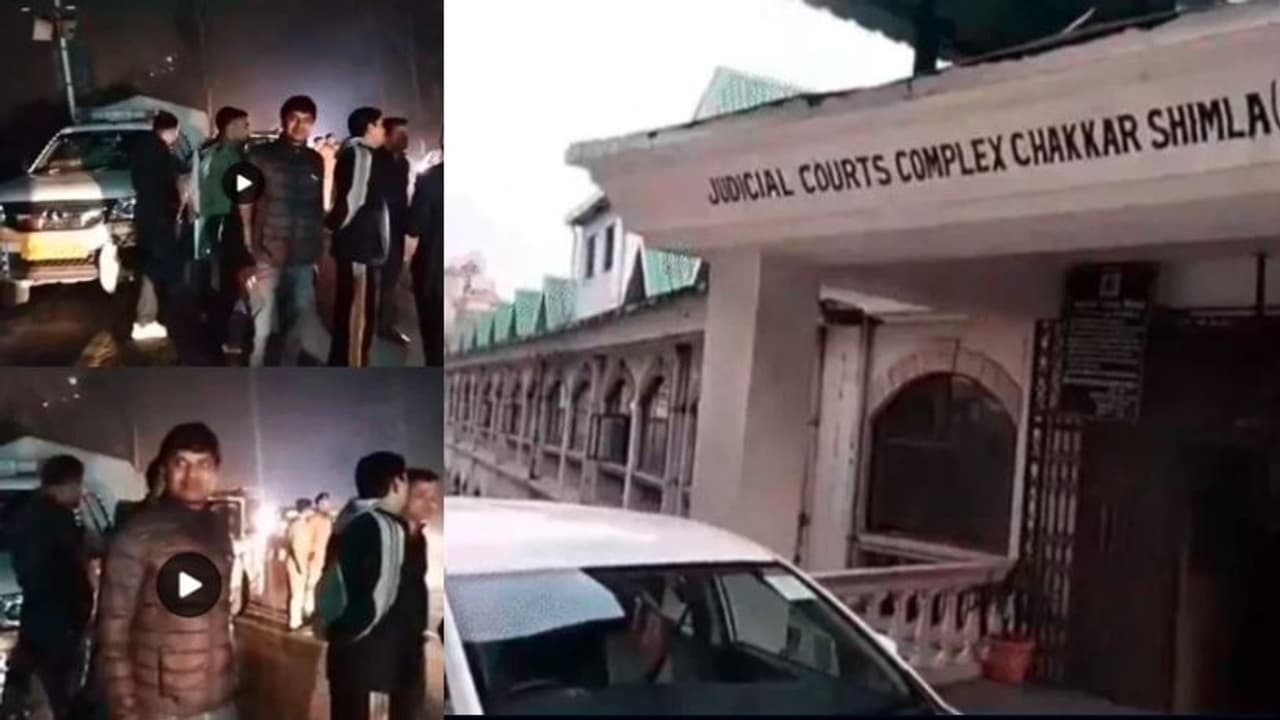
A Delhi Police kidnapping investigation in Shimla led to a standoff with Himachal Pradesh Police. The conflict began after Delhi officers detained suspects, reportedly linked to the Indian Youth Congress, without proper local coordination.
A routine criminal investigation quickly spiralled into a high-profile confrontation between the Delhi Police and Himachal Pradesh Police in Shimla, exposing deep cracks in inter-state coordination. The trigger was a kidnapping case registered in Delhi, in which investigators were pursuing leads that allegedly pointed towards individuals linked to the Indian Youth Congress (IYC).

According to reports, Delhi Police teams travelled to Shimla to detain suspects believed to be connected to the case. However, what was meant to be a procedural follow-up soon escalated into a dramatic standoff when Himachal Pradesh Police intervened, questioning the legality and manner of the arrests.
The situation became tense as local authorities in Shimla reportedly objected to Delhi Police operating in their jurisdiction without proper intimation or coordination. This led to confusion, delays, and eventually a face-off between the two police forces, drawing attention from political leaders and the public alike.
Related Articles

The controversy also gained traction because some of the individuals detained or questioned were reportedly associated with the Youth Congress, adding a political dimension to what initially appeared to be a straightforward criminal investigation.
The Day of Chaos: From Early Morning Detentions to Midnight Standoff
The sequence of events unfolded dramatically over a single day. Reports indicate that Delhi Police began their operation early in the morning, reaching Shimla around dawn to act on intelligence inputs. The officers allegedly detained multiple individuals linked to the case, which immediately raised concerns among local authorities and political groups.
Himachal Pradesh Police soon stepped in, seeking clarity on the detentions and demanding documentation related to the operation. Questions were raised about whether due legal procedures—such as informing local police stations or obtaining necessary permissions—had been followed.
As the day progressed, tensions escalated. Supporters of the detained individuals and members of the Youth Congress gathered, leading to protests and heightened political rhetoric. The situation became increasingly volatile, with both police forces standing their ground over jurisdictional authority.
The standoff reportedly continued for hours, stretching into the night. Negotiations and back-and-forth discussions took place between officials from both sides, as well as senior authorities attempting to defuse the crisis. Eventually, the situation was brought under control, but not before it exposed serious coordination gaps.
The dramatic nature of the episode—from early morning action to a prolonged late-night impasse—made it a major talking point, with visuals and updates circulating widely across media platforms.
Legal Questions, Political Fallout, and What Happens Next
At the heart of the controversy lies a crucial legal question: how should police forces operate across state boundaries in India? While inter-state cooperation is a routine aspect of law enforcement, it requires adherence to established protocols, including informing local authorities and working in coordination with them.
The Shimla standoff has reignited debate over these procedures. Critics argue that any deviation from protocol can lead to confusion, misuse of power, or even political targeting. Supporters of the Delhi Police, however, maintain that swift action is sometimes necessary in criminal investigations, especially in serious cases like kidnapping.
The political angle has further complicated matters. With Youth Congress members reportedly involved, opposition parties have accused authorities of harassment and overreach, while others have defended the investigation as legitimate and necessary.
The incident also underscores the broader issue of trust and coordination between different state police forces. Experts believe that clearer guidelines, better communication, and stronger institutional mechanisms are needed to prevent such confrontations in the future.
As of now, the investigation into the kidnapping case continues, and the legal validity of the actions taken by both police forces may come under scrutiny. Authorities are yet to provide a definitive resolution or detailed explanation addressing all concerns raised during the standoff.
What remains clear is that the episode has set a precedent—highlighting how quickly law enforcement actions can turn contentious when jurisdictional boundaries, legal protocols, and political sensitivities intersect.