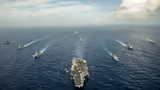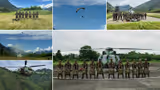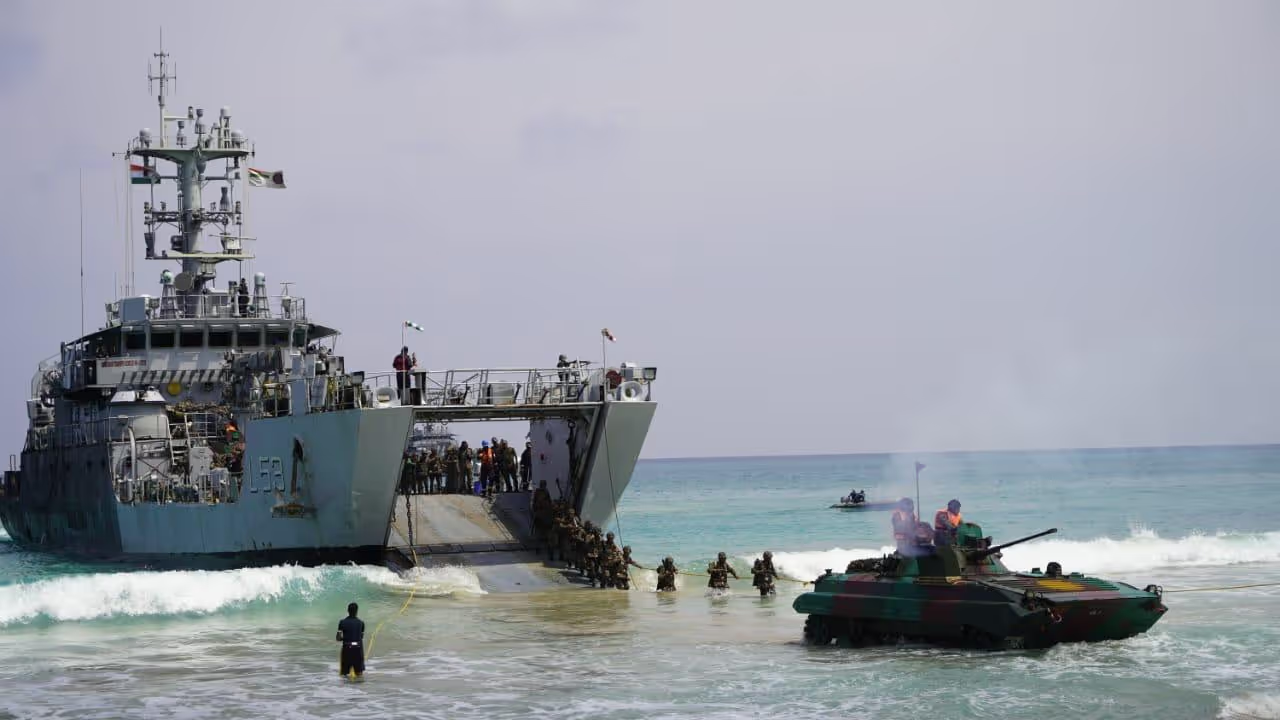
India's Army, Navy and IAF carried out major joint exercise called 'Dweep Shakti' from March 24 to 28 in Andaman & Nicobar Islands. The drill tested quick response, amphibious assaults and coordinated operations using modern equipment and drones. It showed strong preparedness and teamwork among forces. Vice Admiral Ajay Kochhar praised the troops.
New Delhi: India’s tri-service has conducted a high-intensity exercise “Dweep Shakti” along the coastal and island defence operations from March 24 to 28, validating integrated capability for rapid response.

In seamless synergy, Indian Army, Indian Navy, and Indian Air Force executed coordinated amphibious assaults, maritime dominance operations and complex beach landing drills employing Next-Generation equipment and drones, reaffirming precision, jointness and mission-ready interoperability.
“The exercise also refined integrated tactics, techniques and procedures, reinforcing the armed forces’ growing multi-domain capability and steadfast commitment to securing India’s maritime frontiers and island territories,” a defence official said.
Deployment of Army, Navy and Air assets across the islands, along with activation of key operational and support mechanisms in coordination with local civil administration of Andaman & Nicobar, formed a vital component of the exercise.
Officials on Exercise Dweep Shakti 2026
According to the officials, ‘Exercise Dweep Shakti 2026’ demonstrated a high level of operational preparedness and robust military capability of the armed forces in safeguarding India’s maritime interests and ensuring security of the Andaman and Nicobar Islands.
Vice Admiral Ajay Kochhar, Commander-in-Chief, Andaman and Nicobar Command (CINCAN), witnessed the exercise and commended participating troops from various formations for their professionalism and successful conduct of operations.
Related Articles

“Such exercises continue to strengthen defence preparedness while reinforcing commitment towards maintaining peace and security in the region.”