
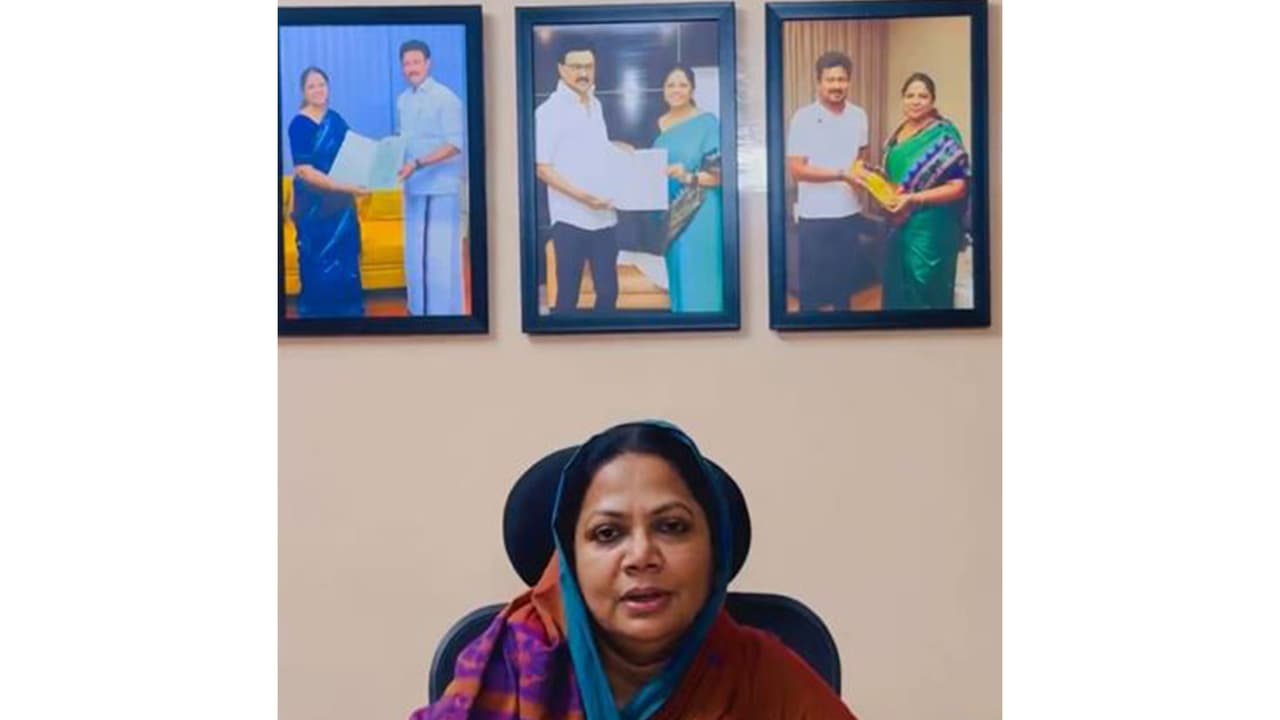
DMK MP Rathiji 'Salma' took a jibe at the Centre after Pakistan's intervention reportedly led to a US-Iran ceasefire. An expert, however, questions Pakistan's motives, suggesting it could be acting on behalf of China.
Dravida Munnetra Kazhagam (DMK) Rajya Sabha MP Rathiji 'Salma' on Wednesday took a jibe at the Centre over Pakistan's role in the two-week ceasefire between the United States and Iran. In an X post, Rajithi wrote, "The war has come to a halt due to Pakistan's intervention. Poor 'Vishwalguru'! How are you, Sanghis going to stomach this?"

US, Iran Agree to Two-Week Ceasefire
This comes after US President Donald Trump suspended the "bombing and attack" campaign on Iran, announcing a two-week double-sided ceasefire and accepting the 10-point proposal from Iran. The Iranian side then accepted US President Donald Trump's peace overture and agreed to safe passage via the Strait of Hormuz for two weeks as well as a pause in military operations.
Pakistan Prime Minister Shehbaz Sharif welcomed the two-week ceasefire and invited the delegation to Islamabad on Friday, April 10, to negotiate a permanent deal.
"With the greatest humility, I am pleased to announce that the Islamic Republic of Iran and the United States of America, along with their allies, have agreed to an immediate ceasefire everywhere, including Lebanon and elsewhere, EFFECTIVE IMMEDIATELY," Pakistan PM said in a post on X.
"I warmly welcome the sagacious gesture and extend deepest gratitude to the leadership of both countries and invite their delegations to Islamabad on Friday, 10th April 2026, to further negotiate for a conclusive agreement to settle all disputes," he added.
Analyst Questions Pakistan's 'Bizarre' Role
However, Executive Director at the Foundation for Defence of Democracies (FDD) and former US Treasury counterterrorism analyst, Jonathan Schanzer, felt that Pakistan is deeply indebted to China. So, it remains to be seen if Pakistan is broadening its alliances by siding with the US or if it is doing the bidding of China.
"When we look at Pakistan, we need to understand that this is a country greatly indebted to China. Through the Belt and Road Initiative and debt-trap diplomacy, China has the Pakistanis right where they want them. The question is: Are the Pakistanis trying to work with the United States to perhaps make new friends and broaden their alliances, or are they doing the bidding of China? Are they essentially a mouthpiece for the Chinese Communist Party? At this point, we just don't know the answer to that," he said.
Schanzer said that Pakistan's pushing itself into a negotiating role with the White House was bizarre.
"Their role in all of this is just so unlikely and bizarre. There are a lot of things I didn't expect to see in 2026; this is probably among the top ones. And yet, somehow, the Pakistanis have insinuated themselves into the White House. They're part of the discussions about Gaza and part of the Iran deal. How this has happened and what they want in return has yet to be explained," he said.
With all sides agreeing to a pause in the military campaign, hope springs that the conflict, which started on February 28 will now come to an eventual end and peace will prevail in West Asia.
(Except for the headline, this story has not been edited by Asianet Newsable English staff and is published from a syndicated feed.)