
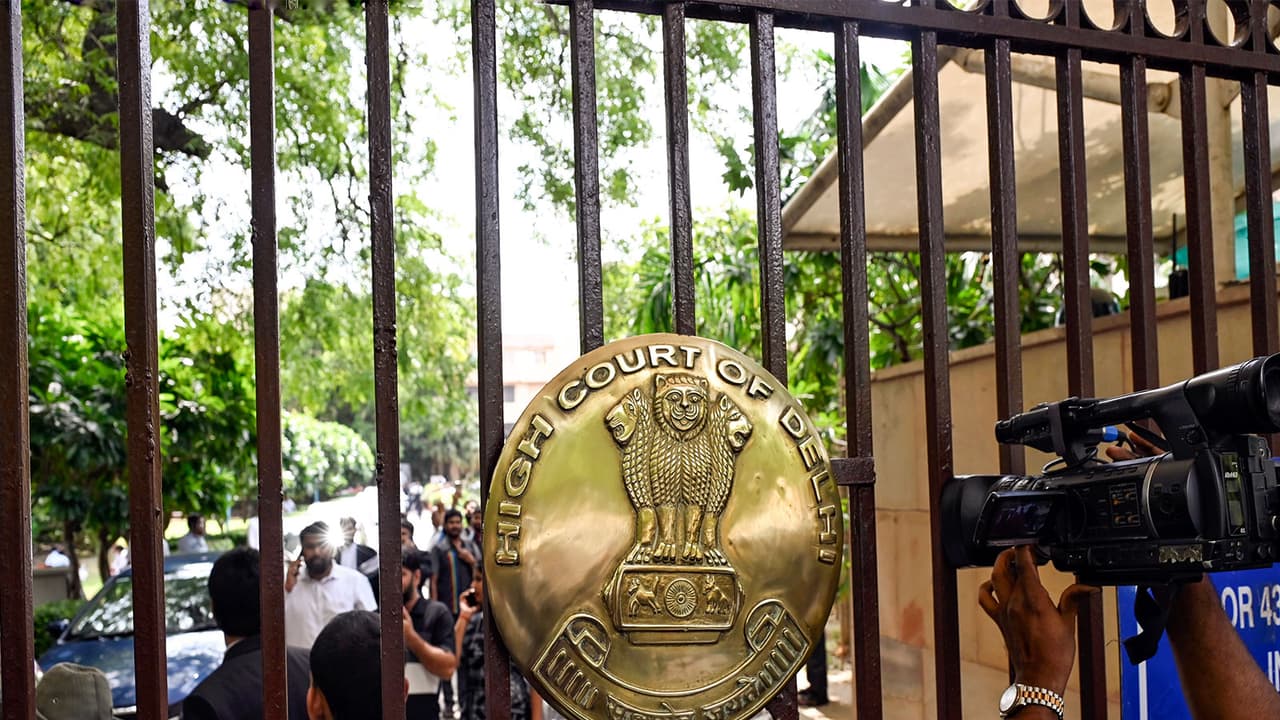
The Delhi High Court fined a petitioner ₹50,000 for repeatedly misusing the judicial process by filing and withdrawing multiple petitions against alleged unauthorised constructions, citing 'oblique and non-bona fide motives'.
The Delhi High Court has found that a petitioner had repeatedly misused the judicial process by filing multiple writ petitions against alleged unauthorised constructions without pursuing them to their logical end, holding that the conduct pointed to oblique and non-bona fide motives.

Pattern of Misuse and 'Ulterior Motives'
Justice Mini Pushkarna, while dealing with a writ petition seeking directions to the Municipal Corporation of Delhi (MCD) to demolish alleged illegal construction at a property in Sector-15, Rohini, noted that this was the fifth such petition filed by the petitioner in relation to different properties in the same area. The Court observed that in earlier instances as well, the petitioner either failed to pursue the petitions or withdrew them after claiming that the property owners had themselves begun removing the constructions.
The Court recorded submissions of the MCD that the petitioner had approached the Court multiple times against different properties, including by filing a contempt petition, which was later also withdrawn. Counsel for the private respondent went a step further, alleging that the petitioner was a "blackmailer" who had been targeting multiple property owners in the locality.
After examining the record, the High Court held that the petitioner was not directly affected by the alleged unauthorised constructions and that the pattern of filing and abandoning petitions clearly indicated misuse of the writ jurisdiction. The Court observed that the petitioner's actions lacked bona fides and appeared to be driven by ulterior motives, reiterating that no litigant can be allowed to abuse the process of law for self-serving ends.
Court Imposes ₹50,000 Cost as Deterrent
During the hearing, once the petitioner's conduct came under scrutiny, his counsel sought permission to withdraw the petition. While allowing the withdrawal, the Court imposed costs of ₹50,000 on the petitioner, directing the amount to be deposited with the Delhi High Court Bar Association Costs Account within four weeks, as a deterrent against such conduct in future.
Action on Unauthorised Construction to Continue
At the same time, the Court clarified that unauthorised constructions cannot be ignored merely because of the petitioner's conduct. Taking note of MCD's submission that the construction in question had already been "booked," the Court directed the civic body to proceed against the unauthorised construction strictly in accordance with law and due process.
The matter has been listed before the Joint Registrar on January 9, 2026, for compliance regarding payment of costs by the petitioner.
(Except for the headline, this story has not been edited by Asianet Newsable English staff and is published from a syndicated feed.)