
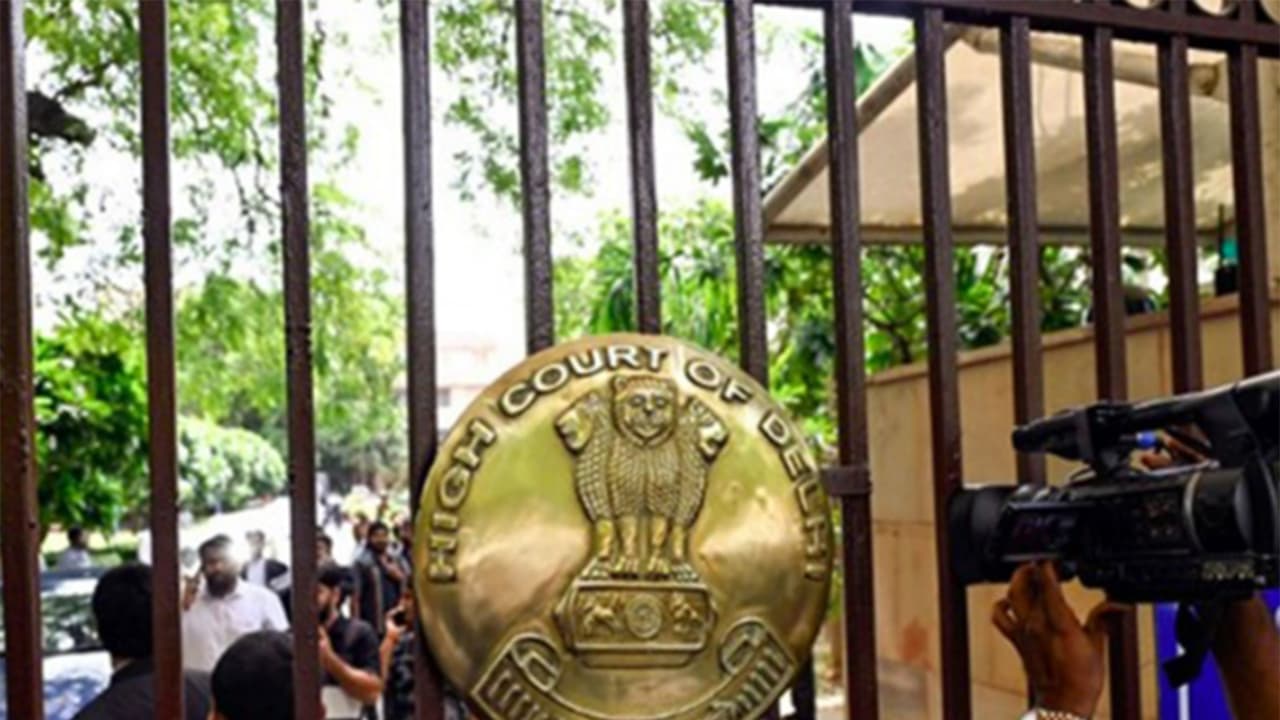
Delhi High Court ruled that including a government officer in an "Agreed List" is not a valid ground to deny promotion without formal disciplinary or criminal proceedings. It directed notional promotion for a retired officer based on this principle.
Ruling on 'Agreed List' and Promotions
In a significant ruling, the Delhi High Court has held that inclusion of a government officer in the "Agreed List" cannot be used as a ground to deny promotion, particularly in the absence of any formal disciplinary proceedings or criminal prosecution. The Court directed the grant of notional promotion along with all consequential benefits to a retired officer of the Indian Ordnance Factory Service.

Case Background and Initial Rulings
The Division Bench of Justice Anil Kshetrapal and Justice Amit Mahajan observed that the denial of promotion solely on the basis of the officer's inclusion in the Agreed List was legally untenable. It reiterated that the law governing promotions is well-settled and limited to specific circumstances laid down by the Supreme Court in Union of India v. K.V. Jankiraman.
The case arose from a situation where the officer had been found fit for promotion by the Departmental Promotion Committee (DPC), and the recommendation had also received approval from the Appointments Committee of the Cabinet (ACC). However, the promotion was withheld by the authorities on the grounds that the officer's name appeared in the Agreed List due to alleged vigilance concerns. Although the Central Administrative Tribunal had earlier directed that the DPC recommendations be implemented, the authorities subsequently passed an order denying promotion by invoking vigilance-related considerations, including alleged irregularities in financial management and pending inquiries.
Legal Framework Governing Promotions
Examining the legal framework, the High Court clarified that Office Memorandums relating to vigilance clearance for empanelment or sensitive postings, such as those dated 14.12.2007 and 21.06.2013, do not apply to promotions. Instead, promotions are governed by Office Memorandums dated 14.09.1992 and 25.10.2004, which restrict the denial of promotion only to three situations: when an officer is under suspension, when a chargesheet has been issued in disciplinary proceedings, or when criminal prosecution is pending.
The Court found that none of these conditions was met in the present case. It emphasised that mere suspicion, preliminary inquiry, or inclusion in a list such as the Agreed List cannot justify withholding promotion. The Bench also underlined that even if allegations exist, the government has the option to suspend an officer if the matter is serious, rather than denying promotion without meeting the prescribed legal thresholds.
Court's Critique of the 'Agreed List'
Critically assessing the concept of the Agreed List, the Court described it as vague and lacking clear parameters. It was observed that the absence of defined criteria creates scope for arbitrary action and allows denial of promotion based on doubt or suspicion, which is impermissible in law.
The Court also took note of the fact that, despite the passage of several years, no concrete action had been taken against the officer in relation to the allegations that led to inclusion in the Agreed List. This, according to the Court, further weakened the justification for denying promotion.
Final Verdict and Directive
In conclusion, the High Court held that the officer was entitled to promotion based on the recommendations of the DPC and approval by the ACC. Since the officer had already retired, the Court directed the authorities to grant notional promotion with all consequential benefits from the due date.
(Except for the headline, this story has not been edited by Asianet Newsable English staff and is published from a syndicated feed.)