India chairs BRICS in 2026 but faces pressure over the Iran war. With divisions among members and U.S. ties at stake, New Delhi’s cautious stance raises questions about whether BRICS can forge consensus this year.
India’s role as BRICS chair in 2026 has come under scrutiny amid the escalating war in West Asia. On March 21, Iranian President Masoud Pezeshkian urged Prime Minister Narendra Modi to play an “independent role” in ending the conflict. His appeal highlighted the grouping’s silence, even as two of its members, Iran and the UAE, are directly caught in the war.

BRICS, which expanded in 2024–2025 to include Iran, UAE, Ethiopia, Egypt and Indonesia, has not issued a statement on the U.S.-Israeli strikes that began on February 28. India has also refrained from convening an emergency meeting. Officials cite divisions within the bloc, with Russia and China condemning the attacks while India remains silent.
Divisions Within BRICS
MEA spokesperson Randhir Jaiswal admitted consensus has been difficult, given the direct involvement of some members. Iran and the UAE, adversaries in the conflict, are unlikely to agree on a common text. Russia called the strikes “armed aggression,” while China described them as “brazen aggression.” India, however, has avoided criticism of the U.S. and Israel.
Related Articles

India’s caution is linked to its ties with Washington. BRICS is seen as anti-West, exploring de-dollarization, which has already drawn warnings from U.S. President Donald Trump. For New Delhi, leading BRICS too energetically could risk worsening relations with the U.S., especially as it negotiates tariff agreements. Modi’s post on X after speaking with Pezeshkian condemned attacks on infrastructure but avoided mention of Iran’s appeal for an independent role.
The challenge for India is balancing its economic dependence on West Asia with its diplomatic priorities. Oil imports, expatriate remittances, and trade ambitions through Central Asia and Europe hinge on regional stability. Yet, India’s focus has been on safeguarding shipping lanes rather than mediating the conflict.
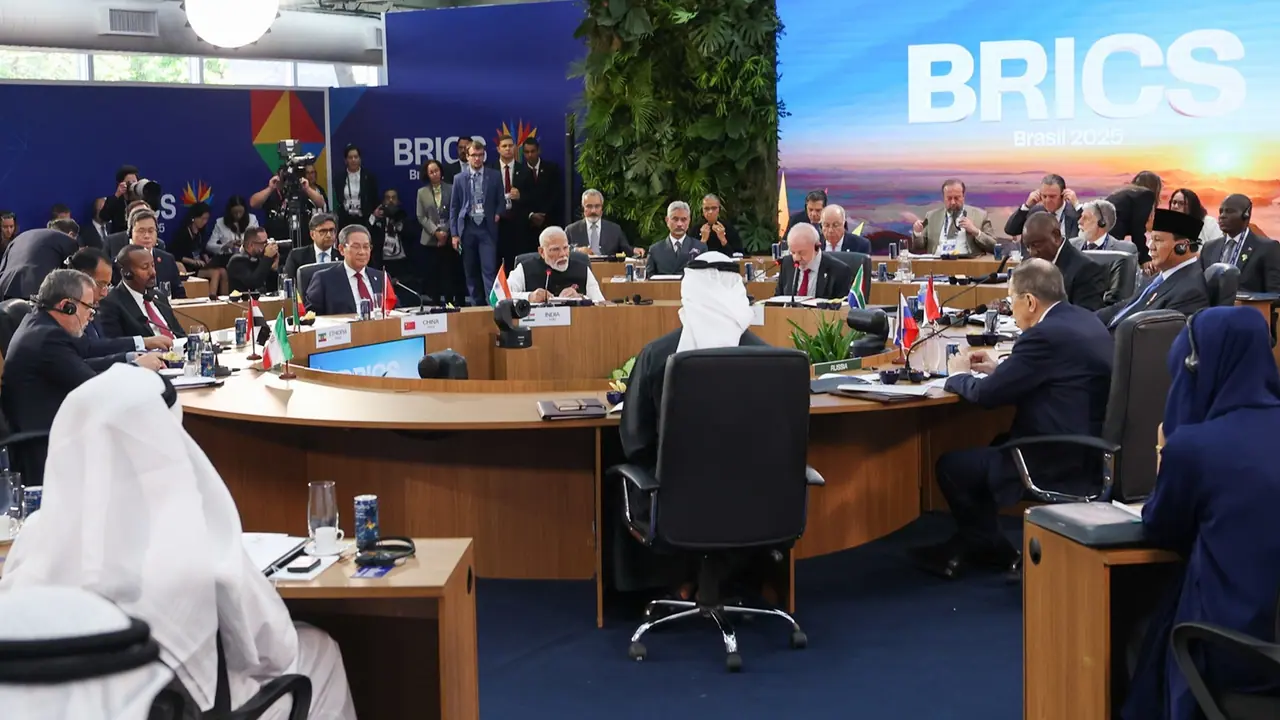
BRICS has shown unity before. In June 2025, under Brazil’s chairmanship, it condemned U.S.-Israel strikes on Iranian nuclear sites as violations of international law. That statement was possible because the conflict had not spread to GCC countries. This year, with Iran targeting the UAE, consensus appears far more elusive.
India will host the BRICS foreign ministers meeting in May and a summit in September. Whether Iran and the UAE attend remains uncertain. Officials suggest the May meeting will be in-person, but divisions could limit outcomes. Unlike Brazil’s robust leadership last year, India seems inclined toward a low-profile approach, potentially resulting in a diluted statement.
For India, ending the war is imperative. Its economy and diaspora depend heavily on West Asia. Leveraging BRICS to call for a ceasefire may be its best option, but the political risks of appearing aligned with Iran could deter bold action.