
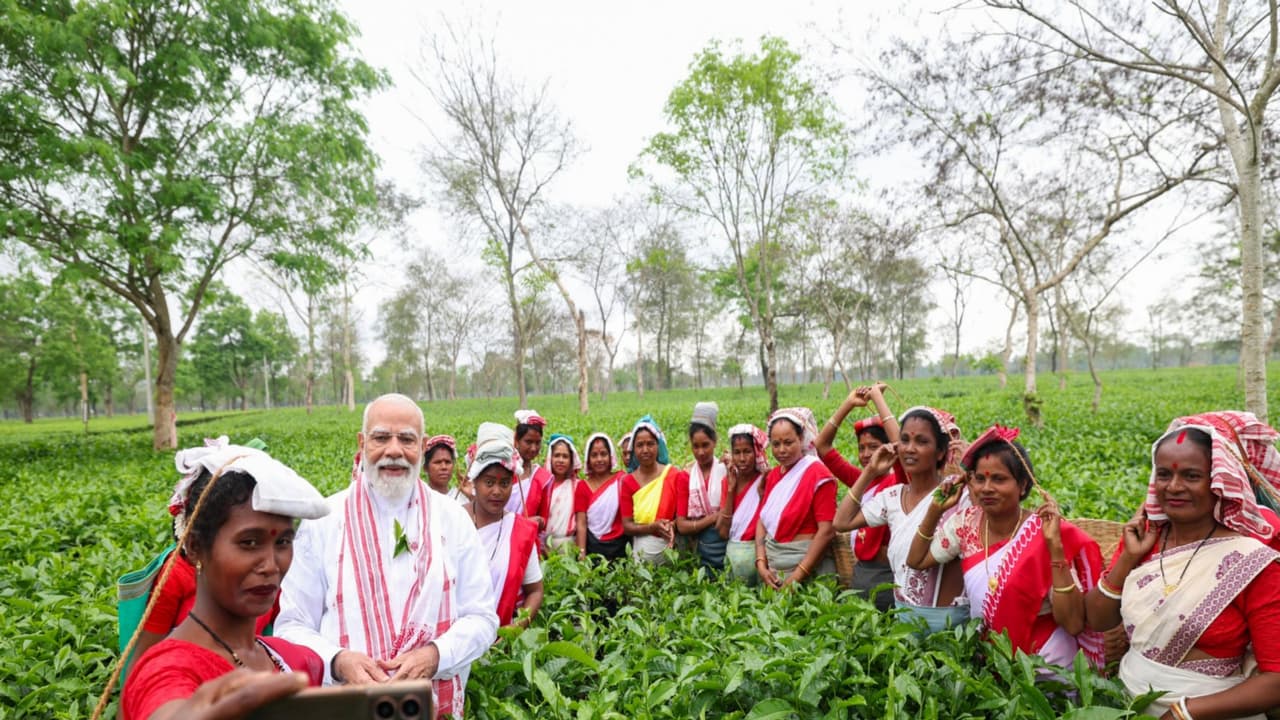
Four major tea producer associations from Assam and West Bengal have written to PM Modi, demanding the withdrawal of a mandate requiring them to sell at least 50% of their tea through public auctions, citing higher costs and trade freedom infringement.
Four of India's leading tea producers from Assam and West Bengal on Friday urged Prime Minister Narendra Modi to withdraw or amend the notification mandating them to sell not less than 50 per cent of their annual production through public tea auctions.

Producers Demand Freedom in Sales
Assam Bought Leaf Tea Manufacturers Association (ABLTMA), North Eastern Tea Association (NETA), Bharatiya Cha Parishad (BCP) and North Bengal Tea Producers' Welfare Association (NBTPWA) wrote to PM Modi demanding that producers get the freedom to choose their mode of sale (auction or private), in line with market dynamics. With reference to the Tea (Marketing) Control (Second Amendment) Order, 2015 and Tea (Marketing) Control (Amendment) Order, 2024, the letter read, "The Ministry of Commerce and Industry, through Gazette Notification S.O. 2688(E) dated October 1, 2015, mandated that all registered tea manufacturers must sell not less than 50 per cent of their total annual production through public tea auctions in India. The notification also provides that the Registering Authority may revise this percentage from time to time with prior approval of the Central Government."
Disadvantages of Compulsory Auctions
"Although this provision has existed for several years, it has not been enforced in practice. However, the recent Circular issued by the Registering Authority seeks to implement the said requirement," the tea producers added. They noted that in public auctions, the tea producers have to incur higher transaction costs and longer selling cycles. They said that historical attempts to make the auction compulsory have not been successful.
The letter stated, "We respectfully submit that compulsory sale through public auctions places tea producers at a significant disadvantage. The auction system involves higher transaction costs and longer selling cycles compared to ex-factory sales. The cost of selling through auctions is approximately Rs 10 per kilogram, amounting to nearly 5 per cent of the average selling price--often exceeding the net profit margins of producers. Detailed undue hardships faced by our members are enclosed."
"It is pertinent to note that several expert committees constituted by the Tea Board have examined the auction system. While recommendations for improving efficiency have been made, none have advocated mandatory auction sales. Historically, attempts to enforce compulsory auction sales have not been successful. Multiple amendments to the Tea (Marketing) Control Order in this regard reflect the challenges associated with such mandates. Furthermore, other Commodity Boards under the Ministry of Commerce and Industry do not impose similar restrictions requiring compulsory sale through auctions. The rationale for such a requirement being uniquely applicable to the tea sector remains unclear," it added.
Infringement on Business Freedom
Calling these mandatory requirements an infringement of their rights to the freedom to carry on trade and business, the tea producers demanded flexibility to choose the mode of sale. They said, "We respectfully submit that this mandate is inconsistent with the Government of India's policy of promoting Ease of Doing Business (EoDB). Producers should have the flexibility to choose the most efficient and viable mode of sale. The current requirement imposes undue financial and operational burdens on the industry."
"It may kindly be noted that the mandate requiring 100 per cent of dust grades to be routed through public auctions in 2024 and 2025 has failed to achieve its intended objectives and has, instead, resulted in a significant escalation in our costs. Despite not delivering the desired outcomes, the Registering Authority of the Tea Board has further extended the requirement of selling 100 per cent of dust grades through auction for an additional year, effective January 1 2026. The mandatory requirement of selling through public auctions constitutes an infringement of our fundamental rights, particularly the freedom to carry on trade and business," the letter read. (ANI)
(Except for the headline, this story has not been edited by Asianet Newsable English staff and is published from a syndicated feed.)