What Trump's Iran Strike Pause Means For Middle East War And Oil Prices
Trump said US has delayed planned strikes on Iran's energy sites after 'very good' talks. Pause is for 5 days while talks continue. Oil prices fell sharply, markets rose. However, tensions remain high, with threats, missile attacks, military actions.
Why the US paused planned strikes
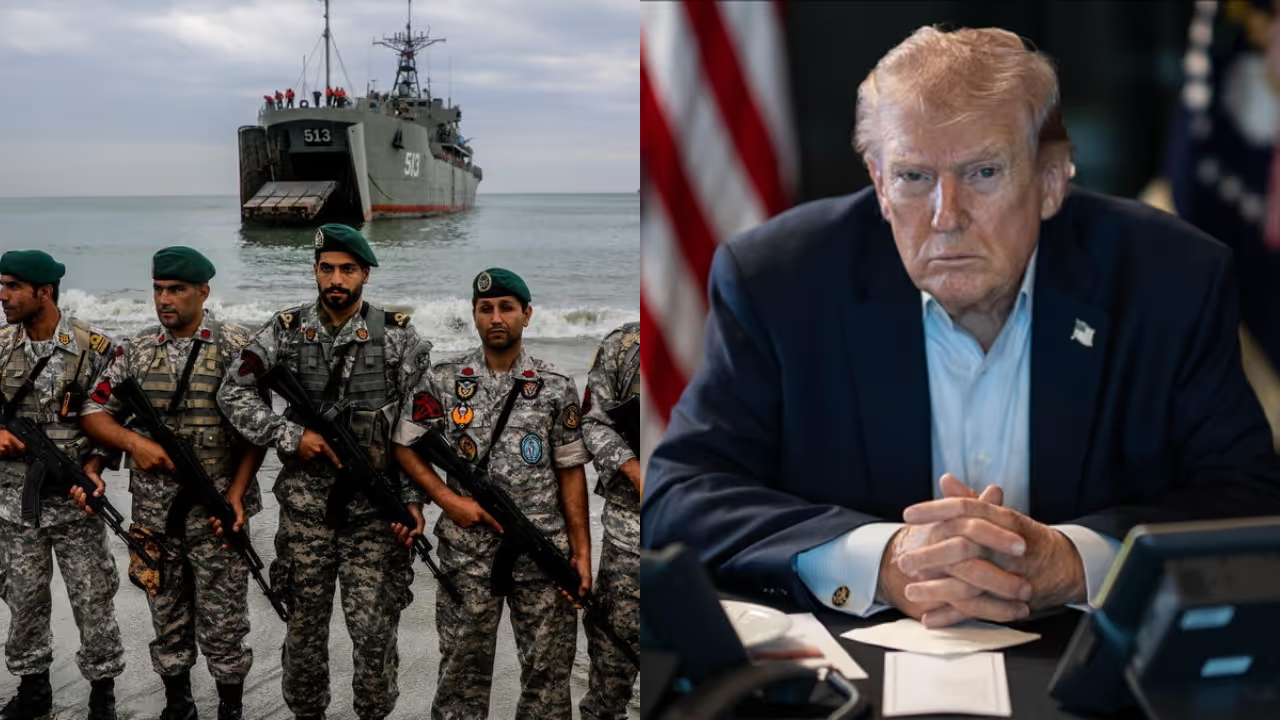
US President Donald Trump announced that he has ordered a temporary halt to planned military strikes on Iran’s energy infrastructure.
He said this decision came after “very good and productive” talks between the United States and Iran over the past few days.
The pause will last for five days. During this time, both sides are expected to continue discussions to find a possible solution to ongoing tensions in the Middle East.
Trump shared the update on his social media platform, saying the final decision on strikes will depend on how talks progress.


What triggered the threat of strikes
The United States had earlier warned Iran of possible attacks on its power plants and energy facilities.
This threat came after Iran was accused of blocking the important Strait of Hormuz, a key route for global oil shipments.
The US said such actions could affect the world’s energy supply. In response, it prepared for possible military action unless the situation improved.
Markets react quickly
Global markets reacted strongly to the news of a possible pause in conflict.
Oil prices dropped sharply. The global benchmark Brent crude fell by more than 14 percent to about $96 per barrel.
At the same time, the US oil benchmark West Texas Intermediate dropped to around $84 per barrel.
Stock markets also rose, showing investor relief that tensions might reduce, at least for now.
Military movements continue
Even as talks continue, military activity in the region has not stopped.
The USS Gerald Ford, one of the world’s largest aircraft carriers, has returned to a base in Crete. The ship had earlier been involved in operations linked to the conflict.
Reports also said the carrier had a small fire incident earlier in March, which injured two crew members.
Rising tensions across the region
The situation in the Middle East remains tense despite the talks.
Iran warned that it could place naval mines in the Persian Gulf if its territory is attacked. This could affect shipping routes and increase risks for global trade.
Iranian state media also shared graphics showing possible targets in nearby countries, including power plants in Saudi Arabia, the UAE, Qatar and Kuwait, as well as major facilities in Israel.
Israel and regional conflict
Israel said its defence systems are working to stop incoming missiles from Iran.
Recent missile attacks injured dozens of people in southern towns near a sensitive nuclear site.
In another incident, Israel confirmed that one of its own artillery strikes accidentally killed a civilian near its northern border. Officials admitted serious errors in planning and execution.
Global leaders call for calm
Several world leaders have called for a peaceful solution.
Russia said the crisis should be solved through political and diplomatic means. Kremlin spokesman Dmitry Peskov warned that tensions are already very high.
China also raised concerns. Its foreign ministry warned that if the conflict grows, the situation could become uncontrollable for the entire region.
France expressed support for its allies. President Emmanuel Macron said France stands with Saudi Arabia and is ready to help strengthen air defence systems.
Energy crisis fears grow
The ongoing conflict is raising serious concerns about global energy supply.
Fatih Birol, head of the International Energy Agency, warned that the world economy faces a major threat.
He compared the current situation to past energy crises in the 1970s and after Russia’s invasion of Ukraine in 2022.
He said the world is now dealing with a mix of oil and gas problems at the same time, and no country will be safe from the effects.
Attacks and defence across Gulf nations
Countries in the Gulf region are also facing attacks.
Saudi Arabia and the United Arab Emirates said they successfully stopped fresh strikes.
In Abu Dhabi, an Indian national was injured by falling debris after a missile was intercepted.
Sirens were also heard in Bahrain, adding to fears across the region.
Strikes and explosions reported
Israel said it carried out large-scale strikes on Tehran. Iranian media reported loud explosions in the capital, and thick smoke was seen rising in the sky.
These developments show that even as talks continue, the situation on the ground remains dangerous.
What happens next
The coming days will be very important.
If talks between the US and Iran succeed, tensions could ease and the risk of a larger war may reduce. However, if talks fail, the United States may go ahead with its planned strikes after the five-day pause.
For now, the world is watching closely as both diplomacy and conflict continue at the same time.
(With inputs from agencies)
Check the Breaking News Today and Latest News from across India and around the world. Stay updated with the latest World News and global developments from politics to economy and current affairs. Get in-depth coverage of China News, Europe News, Pakistan News, and South Asia News, along with top headlines from the UK and US. Follow expert analysis, international trends, and breaking updates from around the globe. Download the Asianet News Official App from the Android Play Store and iPhone App Store for accurate and timely news updates anytime, anywhere.