In Pictures: WHO Turns to AI to Rethink the Future of Traditional Medicine
The WHO has opened a major conference in New Delhi to explore how AI and frontier science can help regulate, validate and integrate traditional medicine, making centuries-old practices safer, evidence-based and compatible with modern healthcare.
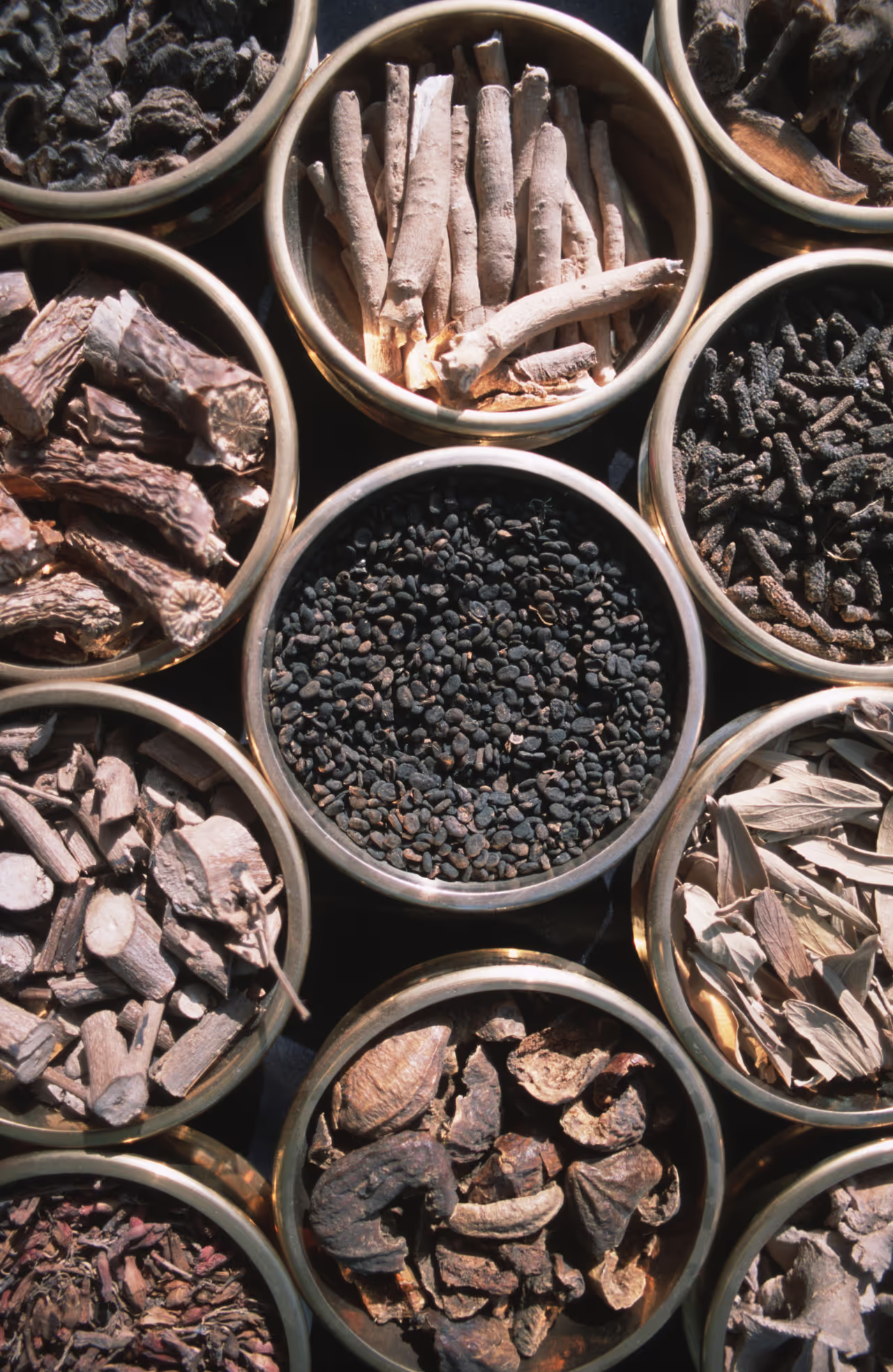
Regulate traditional medicine
The World Health Organization opens a major conference on traditional medicine on Wednesday, arguing that new technologies, including artificial intelligence, can bring scientific scrutiny to centuries-old healing practices. The meeting in New Delhi will examine how governments can regulate traditional medicine while using emerging scientific tools to validate safe and effective treatments.


‘Traditional medicine is not a thing of the past’:
The UN body hopes this push will help make ancestral practices more compatible with modern healthcare systems. "Traditional medicine is not a thing of the past," WHO chief Tedros Adhanom Ghebreyesus said in a video released ahead of the three-day conference. "There is a growing demand for traditional medicine across countries, communities, and cultures."
Potential of traditional medicines
Indian Prime Minister Narendra Modi, in his own message, said the summit would "intensify efforts to harness" the potential of traditional medicine. Modi is a longtime advocate of yoga and traditional health practices and has backed the WHO Global Centre for Traditional Medicine, launched in 2022 in his home state of Gujarat.
'Traditional medicine available for many'
"With half the world's population lacking access to essential health services, traditional medicine is often the closest -- or only care -- available for many people," Shyama Kuruvilla, the head of the centre told AFP in New Delhi.
Evidence-informed
The UN agency defines traditional medicines as the accumulated knowledge, skills and practices used over time to maintain health and prevent, diagnose and treat physical and mental illness. But many lack proven scientific value, while conservationists warn that demand for certain products drives trafficking in endangered wildlife, including tigers, rhinos and pangolins. The WHO also lists the development of the anti-malaria treatment artemisinin as drawing on ancient Chinese medicine texts.
Frontier science
Rapid technological advancements, including artificial intelligence, had pushed research to a "transformative moment", to apply scientific rigour to traditional remedies. The WHO will also launch what it calls the world's largest digital repository of research on the subject -- a library of 1.6 million scientific records intended to strengthen evidence and improve knowledge-sharing.
AI Assist
Dr Sylvie Briand, WHO's chief scientist, said AI can assist in analysing drug interactions. "Artificial intelligence, for instance, can screen millions of compounds, helping us understand the complex structure of herbal products and extract relevant constituents to maximise benefit and minimise adverse effects," she told reporters ahead of the conference. Briand said advanced imaging technologies, including brain scans, were shedding light on how practices such as meditation and acupuncture affect the body.
Stay updated with the Breaking News Today and Latest News from across India and around the world. Get real-time updates, in-depth analysis, and comprehensive coverage of India News, World News, Indian Defence News, Kerala News, and Karnataka News. From politics to current affairs, follow every major story as it unfolds. Get real-time updates from IMDon major cities weather forecasts, including Rain alerts, Cyclonewarnings, and temperature trends. Download the Asianet News Official App from the Android Play Store and iPhone App Store for accurate and timely news updates anytime, anywhere.