
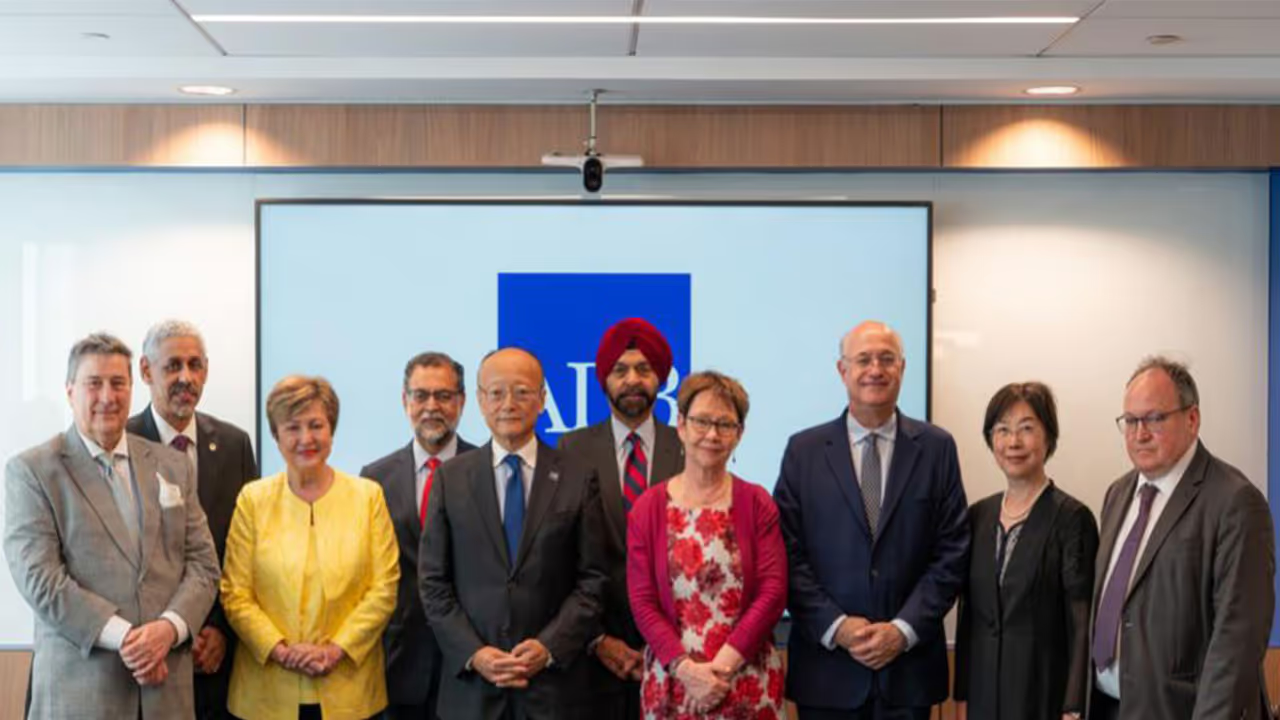
Meeting in Washington, heads of Multilateral Development Banks (MDBs) have pledged to deepen collaboration to support member countries facing global uncertainty, focusing on mobilizing private finance and building resilience amid evolving global pressures.
Multilateral Development Bank (MDB) leaders have pledged to deepen their collaboration to support member countries facing heightened global uncertainty. Meeting in Washington DC on the sidelines of the World Bank Group-International Monetary Fund Spring Meetings, the heads of the world's major development institutions underscored the importance of close cooperation to maintain stability and safeguard development progress.

The Heads of MDBs Group includes the African Development Bank Group, Asian Development Bank, Asian Infrastructure Investment Bank, Council of Europe Development Bank, European Bank for Reconstruction and Development, European Investment Bank, Inter-American Development Bank Group, Islamic Development Bank, New Development Bank, and the World Bank Group. The International Monetary Fund also participates in the Heads discussions.
Addressing Global Pressures
The leaders noted that the evolving situation in the Middle East and shifting financial conditions are contributing to mounting pressures across their member economies. According to a Joint News Release, these global developments are already manifesting through higher energy costs, supply chain disruptions, and tighter financial conditions. The heads emphasized their readiness to deploy timely support to help clients manage risks and protect vulnerable populations.
"MDBs are working more closely than ever to support our members and clients through a complex and evolving global environment," said Masato Kanda, President of the Asian Development Bank and current Chair of the MDB Heads Group. "By combining our financial strength, knowledge, and partnerships, we are helping countries manage immediate pressures while building resilience for the future," Kanda added.
Key Financial Strategies and Mobilization
The heads of these institutions reaffirmed their commitment to delivering impact at scale, with a specific focus on private sector development, job creation, and long-term sustainable growth. A key priority identified was the mobilization of private finance. The leaders agreed to establish a working group to advance "originate-to-distribute" approaches, which are intended to create bankable opportunities and attract private capital at scale.
To mitigate exchange rate risks, the group plans to scale up local currency financing and develop domestic financial markets. They also recognized the need for increased transparency regarding credit risks in emerging markets through the Global Emerging Markets (GEMS) consortium. Furthermore, the banks agreed on a common approach to measure how their operations impact job creation and poverty reduction.
Collaboration on Infrastructure and Resources
On the infrastructure and resource front, the MDBs are strengthening collaboration on critical minerals to ensure resilient supply chains for energy security and digital transformation. The meeting also saw the launch of "Water Forward," a global initiative aimed at developing investable water systems to drive food security and prosperity.
Enhancing Systemic Effectiveness
The heads also indicated that joint efforts would continue in other priority areas, such as artificial intelligence. To improve systemic effectiveness, the leaders agreed on a common framework for Value for Money in procurement. This framework is designed to ensure the quality and sustainability of projects, with each bank refining the guidelines to fit its specific operational context. They also highlighted progress in mutual reliance frameworks to streamline the joint financing of projects. (ANI)
(Except for the headline, this story has not been edited by Asianet Newsable English staff and is published from a syndicated feed.)