
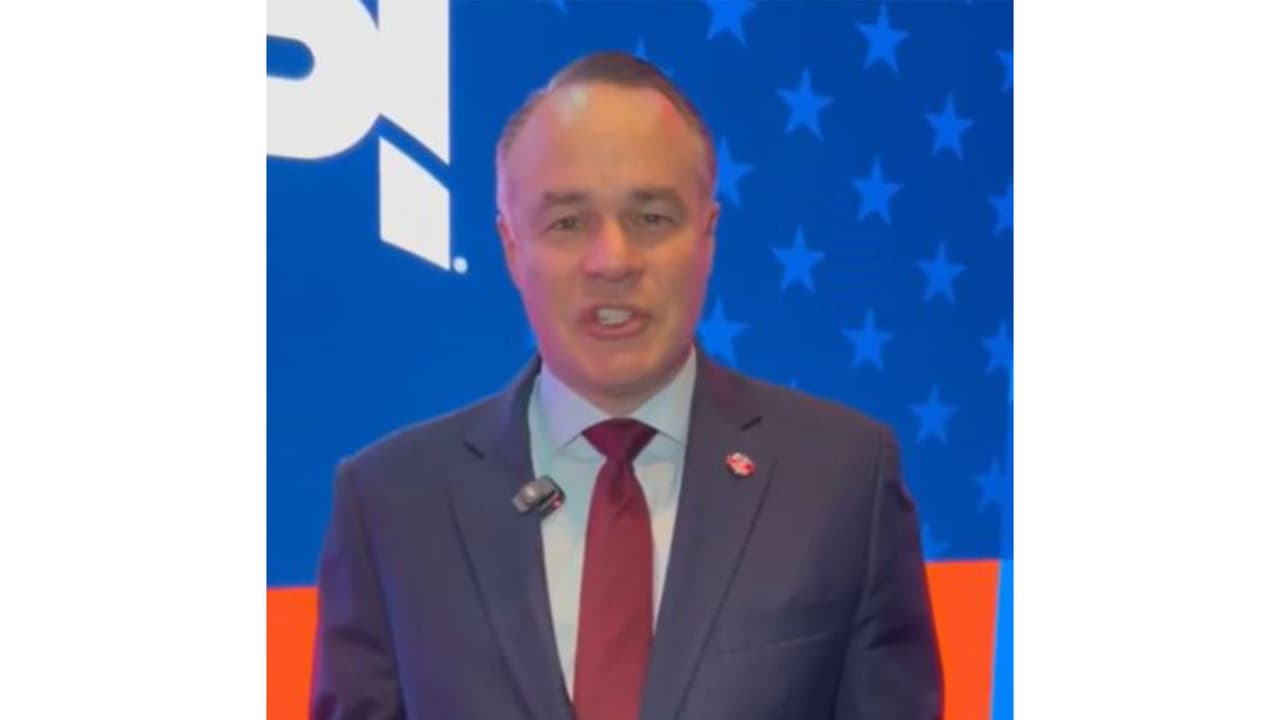
API CEO Mike Sommers urged the reopening of the Strait of Hormuz to stabilise global oil prices amid the US-Iran conflict. He warned that continued closure of the key shipping route will cause rising energy prices in the US, Europe, and Asia.
Mike Sommers, CEO, American Petroleum Institute, said that reopening the Strait of Hormuz is critical to stabilising global oil and gas prices amid the ongoing US-Israel-Iran conflict. He highlighted the growing impact of supply disruptions on global energy markets.

According to a news report by Politico, Sommers said the White House's most effective lever to control rising energy prices is to restore tanker movement through the key shipping route. "The truth of the matter is there's no replacement for the strait. That is the critical piece that has to be done and done quickly," Sommers said while speaking at the POLITICO Pub at CERAWeek by S&P Global. He added, "Otherwise, you're going to continue to see rising prices across the country, not just here in the United States, but the real effect you're really seeing is in both Europe and Asia, where a lot of this oil is flowing."
Impact of Hormuz Closure on Global Markets
The Strait of Hormuz, through which about 20 per cent of the world's oil production passes, has remained closed since the outbreak of the war with Iran, significantly disrupting global energy supply chains. Sommers noted that the ongoing conflict has led to oil prices reaching their highest levels in years, with several countries in Asia already facing shortages of diesel and jet fuel.
US Producers Cautious Amid Price Volatility
The report also highlighted that the average price of gasoline in the United States stood at USD 3.97 per gallon on Tuesday, according to AAA. Despite rising prices, US oil and gas producers have not significantly increased output. Sommers said producers are cautious due to the volatility in prices. "We don't know how long the prices are going to remain at this elevated level. So I think you're going to see a muted response at this time," he said.
Call for a Lasting Geopolitical Solution
He also described the conflict as part of a long-standing geopolitical issue dating back to 1979, when Iran held 66 Americans hostage, and stressed the need for a lasting solution. Sommers added that industry leaders want to ensure that Iran does not retain the ability to disrupt the strait in the future.
"I will also say, if you talk to API member CEOs, they also want to make sure that we're finishing the job in Iran. We can't leave Iran in a position where they can control the strait with any given drone that they shoot into the strait on any given day," he said.
Energy Policy and Bipartisan Action Urged
The report further noted that energy executives have emphasised the importance of stable energy supplies from multiple sources. However, reforms to streamline energy project approvals remain stalled in the US Congress due to political differences. Sommers urged policymakers to adopt a balanced approach, saying, "Our call is for everybody to put their weapons down. This should be energy agnostic."
The American Petroleum Institute is a sponsor of the POLITICO Pub at CERAweek by S&P Global.
The ongoing crisis highlights the critical role of the Strait of Hormuz in global energy markets and the far-reaching consequences of its disruption. (ANI)
(Except for the headline, this story has not been edited by Asianet Newsable English staff and is published from a syndicated feed.)