
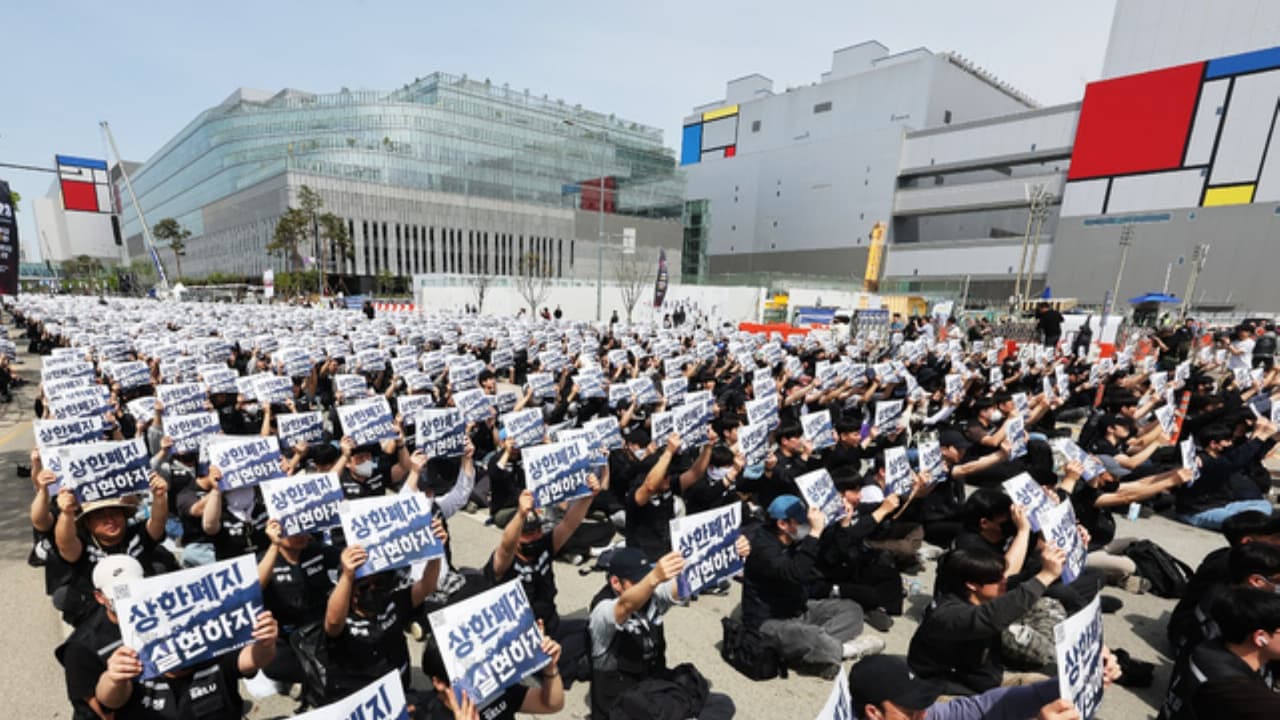
Samsung's board chief warns of sweeping economic fallout from a looming strike by its chip-division workers. He urged a return to negotiations amid a dispute over performance bonuses, citing risks to the company and the broader South Korean economy.
Samsung Board Chief Warns of 'Sweeping Economic Fallout'
Samsung Electronics' board chief warned of sweeping economic fallout from a looming strike, urging workers to return to the negotiating table as a dispute over chip-division bonuses escalates, according to The Korea Herald.

Samsung Electronics' board chief warned of sweeping economic fallout from a looming strike, urging workers to return to the negotiating table as a dispute over chip-division bonuses escalates.
Shin Je-yoon said in a message posted Tuesday on the company's internal bulletin board that a walkout could inflict lasting damage on both the company and broader economy, as the standoff over performance pay deepens. "As chairman of the board, I feel a heavy sense of responsibility and regret causing concern," he said, noting the dispute has unsettled shareholders, customers and the public.
Risks to Business and Union Demands
Shin cautioned that an escalation could leave both labour and management with "nowhere to stand," pointing to risks including weakened competitiveness, loss of customer trust and financial damage to investors. "The semiconductor business, a core national industry, hinges on timing and customer confidence," he said. "Any disruption in development or production, or failure to meet delivery schedules, risks eroding our fundamental competitiveness and could lead to customer shifts to rivals."
The union has said it would go on a full-scale strike from May 21 for 18 days if management fails to meet its demands. It is seeking performance bonuses equivalent to 15 per cent of the chip division's operating profit and the permanent removal of bonus caps, warning that the walkout could result in losses of up to 30 trillion won ($20 billion).
Broader Economic Impact Feared
Shin also flagged broader macroeconomic risks, saying large-scale losses and customer defections could weigh on corporate value and ripple across stakeholders, including shareholders, employees and local communities. "A decline in exports worth tens of billions of dollars and a drop in tax revenues of tens of trillions of won could follow, alongside currency volatility and a contraction in gross domestic product," he said, adding that he would work closely with management to seek a resolution.
Samsung's outsized role in the domestic economy heightens the stakes. Combined revenue at seven key affiliates accounted for 19.3 per cent of South Korea's GDP last year, up from 15.1 per cent a decade earlier, while Samsung Electronics alone represents about a quarter of the Kospi's market capitalisation.
Shareholders Threaten Legal Action
Amid the ongoing dispute, a shareholder group has warned it may pursue legal action against Samsung Electronics union members if a planned strike damages key company assets, escalating tensions ahead of a potential walkout, The Korea Herald reported. The Korea Shareholder Activism Groups said in a public statement Tuesday that it would seek compensation from participating workers under a "third-party infringement" legal doctrine if any illegal strike harms the company's core assets.
Divisions Emerge in Labour Front
Separately, the labour front is showing signs of fragmentation, with divisions widening between employees in the profit-driving chip business and non-chip units. Samsung Electronics Co. Union, one of three unions that had jointly threatened strike action, withdrew from the plan on Monday, saying the majority union had failed to address non-chip workers' interests. About 70 per cent of its members are from the device experience (DX) division, which oversees smartphones, TVs and home appliances.
"We do not oppose bonuses, but more than 95 per cent of the negotiations were focused on performance pay for the device solutions division," an official from the SECU said, referring to the division overseeing the semiconductor business. "The talks were largely disconnected from broader welfare issues or concerns affecting the DX business." (ANI)
(Except for the headline, this story has not been edited by Asianet Newsable English staff and is published from a syndicated feed.)