
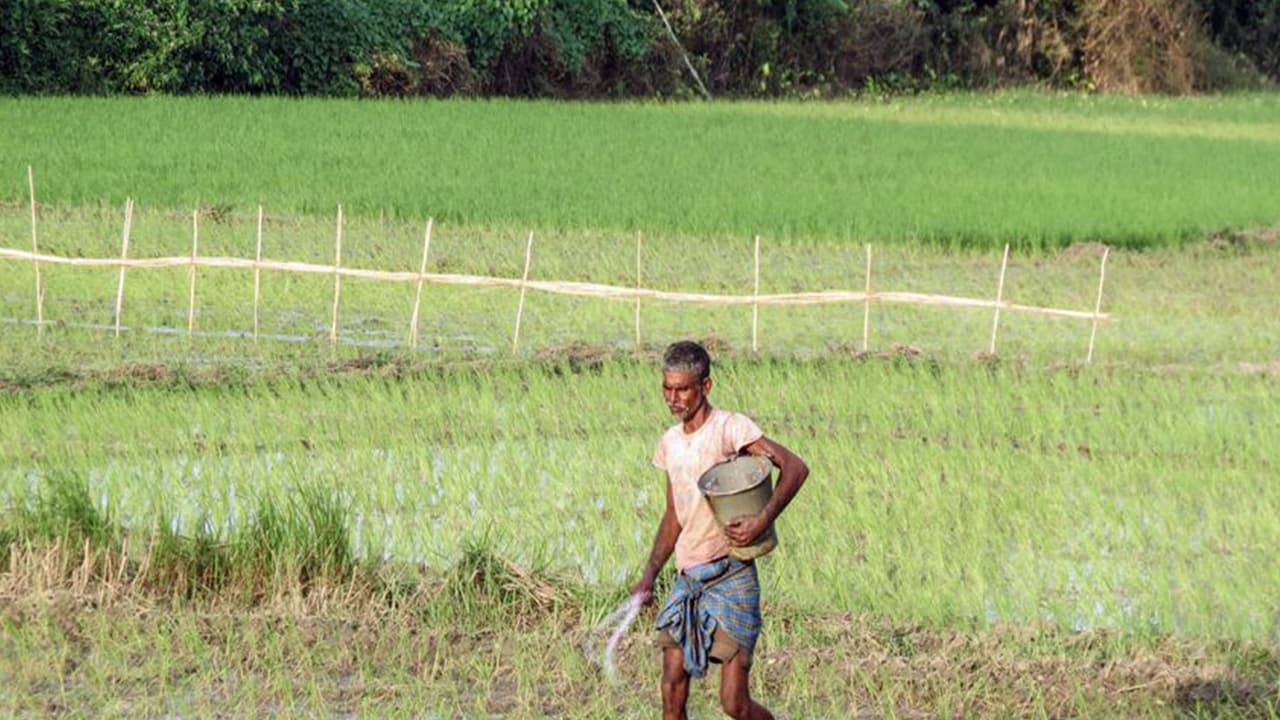
India's farm sector faces a challenging year due to a projected weak monsoon (92% of LPA), El Nino risks, and fertilizer supply concerns from the West Asia conflict, an ICRA report warns, flagging risks to output and food inflation.
Monsoon and El Nino Concerns
The India Meteorological Department's (IMD) first long-range forecast (LRF) for the 2026 Southwest Monsoon pegs rainfall at 92% (+-5%) of the Long Period Average (LPA), indicating below-normal rainfall. ICRA noted that the mid-point estimate is the lowest first LRF in at least 25 years, compared to a range of 93%-106% of LPA seen earlier. This marks a sharp reversal from 2025 and 2024, when rainfall was above normal at 108% of LPA.

Below-normal rainfall is expected to affect kharif crop sowing, which depends on monsoon rains between June and September. "Sub-par rainfall is expected to weigh on sowing of kharif crops, and consequently, agricultural output, farm cash flows and food prices." ICRA said. It may also limit reservoir replenishment, as water levels typically decline before the monsoon and recover during the season.
Global weather agencies have indicated a 62% probability of El Nino developing between June and August 2026. El Nino conditions are usually associated with weaker monsoon rainfall in India. "Regardless of intensity level, the materialisation of El Nino could weigh on the rainfall during Southwest Monsoon season in India, posing risks to crop yields and output," ICRA said.
Fertilizer Supply Risks
Fertilizer availability for the upcoming kharif season is another concern. The ongoing West Asia conflict may disrupt supply chains, affecting both raw materials and finished products. ICRA said this could pose challenges for domestic production and require alternative sourcing to meet demand.
Economic Impact and Outlook
The agency has flagged downside risks to its FY2027 agriculture Gross Value Added (GVA) growth forecast of 3.0%. It also expects consumer price inflation (CPI) to exceed 4.5%, driven by potential increases in food prices. While rural demand may remain supported in the first quarter of FY2027 due to rabi harvest cash flows, the outlook beyond that will depend on monsoon performance.
Mitigating Factors
However, higher reservoir levels offer some support. As of April 2, 2026, all-India reservoir storage stood at 47% of live capacity, compared to 40% last year and a 10-year average of 37%. ICRA said this provides some cushion against weak monsoon conditions, with storage levels above historical trends in most regions except parts of eastern and southern India.
The report highlighted that reasonable increases in minimum support prices (MSPs) for kharif crops will be important to sustain farm sentiment. It added that even with lower overall rainfall, a well-distributed monsoon could help limit damage.
ICRA warned that a combination of below-normal rainfall, El Nino conditions, and fertilizer supply disruptions could pose significant risks to agricultural output, food inflation, and rural demand in FY2027. The extent of the impact will depend on monsoon trends and geopolitical developments in the coming months.
(Except for the headline, this story has not been edited by Asianet Newsable English staff and is published from a syndicated feed.)