
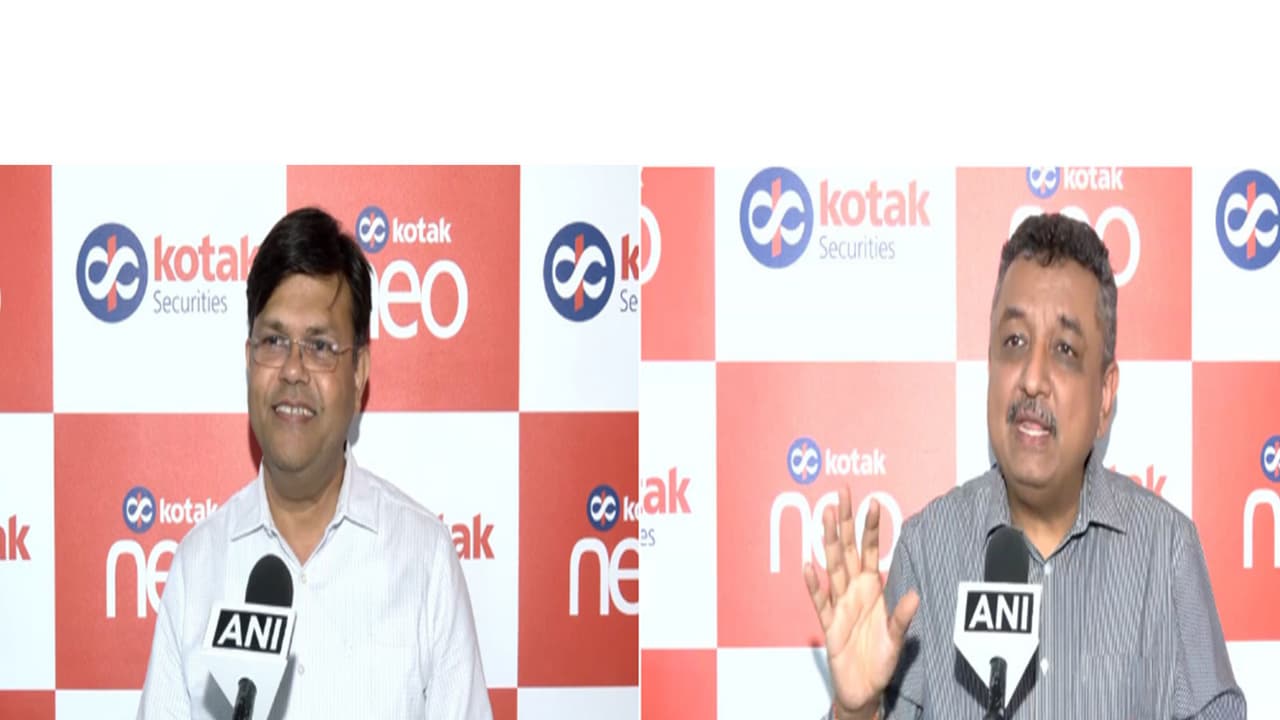
The Indian equity market has hit an "extreme level" in the near term after a deep sell-off, making valuations reasonable and creating opportunities for long-term investors, according to analysts at Kotak Securities.
Market Hits 'Extreme' Low, Bottoming Out Expected
Highlighting the recent market trend, Shrikant Chouhan, Head Equity Research at Kotak Securities, said, "We saw a market falling heavily from the highs of January... from somewhere close to 26,375 to the levels of 22,275," adding that "it's a deep sell-off that we witnessed in a very short span of time." He noted that the correction has been broad-based, stating, "A number of stocks have fallen more than 50%, and now all these large-cap stocks have fallen in the last month." However, he believes the worst may be over in the near term, saying, "The market has fallen to its extreme level in the near term... and from here onwards, we can see some bottoming out... which can again lift the markets towards the levels of 25,000."

Opportunity for Long-Term Investors
Chouhan added that investors should look at opportunities, stating, "We are of the view that we should look for adding some position if there is any correction in the market."
Rupee Under Pressure Amid Crude Rally, FII Outflows
On the rupee, which has been under pressure, he said rising crude prices and capital outflows are key factors. "Crude was somewhere close to $60-70 per barrel prior to this war... and went to the levels of $120 per barrel," he said, adding that this "impacts the current account deficit, inflation and earnings of corporates."
He further noted strong foreign investor selling, saying, "In the last month... they sold more than Rs 1 lakh crore of equity," indicating that "FIIs are currently not confident in the market." He added, "In the near term we can expect some more weakness, but in the long run... government will take a lot of actions to control the rupee's depreciation."
Inflation and Industrial Output Concerns
On inflation, Chouhan said rising LPG and crude prices could exert pressure but the duration of the geopolitical conflict will be key. "If the war continues for more than one month then the impact will be much severe," he said, adding, "If it ends in the next two-three weeks... then the impact will remain limited."
Explaining the broader impact, he said, "This particular rise of $10 per barrel can increase pressure... on GDP and inflation," while noting that current crude prices are already significantly above average levels. On industrial output, he warned of near-term weakness, stating, "The way now there is gas shortage, it is certainly going to impact the manufacturing industry... in the next two-three months we are going to see some downward trend for IIP numbers." Chouhan, however, expressed confidence in industry resilience, saying, "Industries have managed such phases in the past also... during 2008-09 when crude went to $140 per barrel."
Outlook for New Financial Year
On crude outlook, he said, "If this war continues... crude can gradually move towards the levels of 140," but added that India's neutral stance could limit disruption, stating, "There may be some shortage, but it will not be completely off."
Looking ahead to the new financial year, he said market direction will depend largely on energy prices. "Market is the function of where the energy prices are going," he said, adding that crude is likely to "consolidate within the range of $100-120 per barrel." He also said earnings impact may be limited in the immediate term, stating, "The quarterly earnings for fourth quarter will be as per expectations... but maybe the first quarter... will remain a little bit subdued."
Valuations Turn Reasonable
On valuations, he said, "Markets have now reasonably valued... quoting at 16 times as compared to the previous multiples of 18-19 times," adding that "investors have to look for adding investments at current levels with a long-term view."
Regulatory Impact on Trading Volumes
While, Ashish Nanda, President and Digital Business Head at the brokerage, said recent regulatory changes may impact trading volumes but not investment sentiment. "I do not think this will largely impact the decision of an investor whether to invest into India or not," he said, adding that "this will largely be bringing some liquidity down in the market which could be of some concern."
He explained that market participants value liquidity, stating, "The market should have a lot of volumes so that anybody who wants to enter or exit... there should be a lot of liquidity."
Nanda added, "What I believe is volumes will slightly come down and that will impact the ability to trade in the market somewhat," while maintaining that overall investor interest in India remains intact. (ANI)
(Except for the headline, this story has not been edited by Asianet Newsable English staff and is published from a syndicated feed.)