
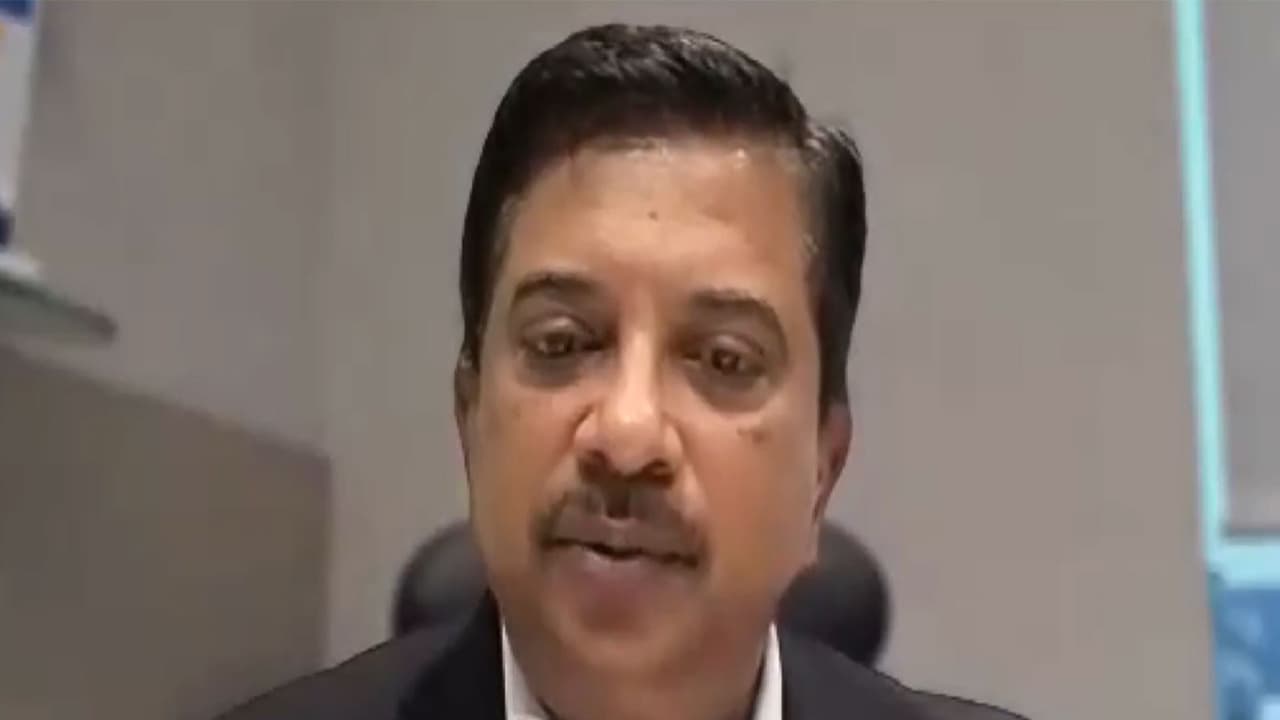
Despite global uncertainty, Mirae Asset CEO Swarup Mohanty remains fully invested in Indian equities, arguing adversities create opportunities to buy quality businesses at attractive prices. He believes India's long-term growth remains intact.
Despite heightened geopolitical uncertainty and shifting global capital flows, Mirae Asset Mutual Fund, Chief Executive Officer and Vice President Swarup Mohanty remains fully invested in Indian equities, arguing that adversities are creating opportunities to buy quality businesses at attractive valuations. His forward-looking view is that India's long-term growth trajectory remains intact, but investors will need greater patience and a broader portfolio approach as the market cycle evolves.

Global Headwinds and Market Vulnerability
Speaking in an exclusive conversation with ANI, Mohanty said the world is witnessing a structural shift in capital allocation as the largest economy changes its behaviour, with sovereign reserves now skewed more towards gold than the dollar for the first time in decades. While this does not alter the dollar's role overnight, it signals a need to closely track global flows. The West Asia conflict has added another layer of volatility, disrupting supply chains and investor sentiment in ways that few anticipated just months ago.
"Just six months ago we were talking about a strong, fundamentally sound India. Six months later, we are talking about a vulnerable India -- not due to any fault of ours, but because of currency impact," Mohanty said. India's GDP ranking has slipped from third to fifth or sixth on currency movements, though he stressed that such shifts can have lasting effects and should not be dismissed as temporary.
Global money flows have also turned cautious on India due to perceptions of limited exposure to artificial intelligence, even as corporate earnings have lagged and growth concerns persist over the last year or two. Coupled with outflows from liquidity-driven markets, this has weighed on sentiment. "Assets which are looking better elsewhere -- as simple as that," he said.
Investment Strategy Amid Adversity
Yet Mohanty remains constructive on India's economic trajectory, projecting growth from $3.5-4 trillion to $7-8 trillion. He believes capital markets will be one of the most effective channels for Indians to participate in that expansion.
"In such adversities, you get some great companies at some great prices, no doubt about that. We are taking full advantage of that. No, we are not in cash at all. We are fully invested," he said. His approach is rooted in risk mitigation rather than aggressive positioning. "It's not a time to be a hero, but it's also a time to look for some good genuine opportunities and thread that very carefully," he said. The house is strengthening positions in existing holdings and filling gaps in the portfolio as valuations correct.
Focus on Banking and Consumer Discretionary
Mohanty is particularly positive on the banking sector, which he believes is available at attractive prices. As per capita income moves from $2,500 to $3,500, he expects consumer behaviour to shift from staples to discretionary spending, creating a new market for companies catering to aspirational demand.
Expanding Investment Universe
The broadening of India's capital market is another factor shaping his outlook. A surge in IPOs over the last three-four years, particularly in mid- and small-cap segments across hospitals, asset management, textiles and chemicals, has widened the investable universe. "The Nifty 500 now represents the Indian stock market, not the Nifty 50," he said, noting that this gives fund managers more scope to build diversified portfolios.
Portfolio Approach and Future Outlook
While inflows into mutual funds remain strong, Mohanty expects a spike in yields at the longer end of the debt curve at some point and is positioning to capture it. For now, he advocates simplicity and fundamental strength in portfolios. (ANI)
(Except for the headline, this story has not been edited by Asianet Newsable English staff and is published from a syndicated feed.)