
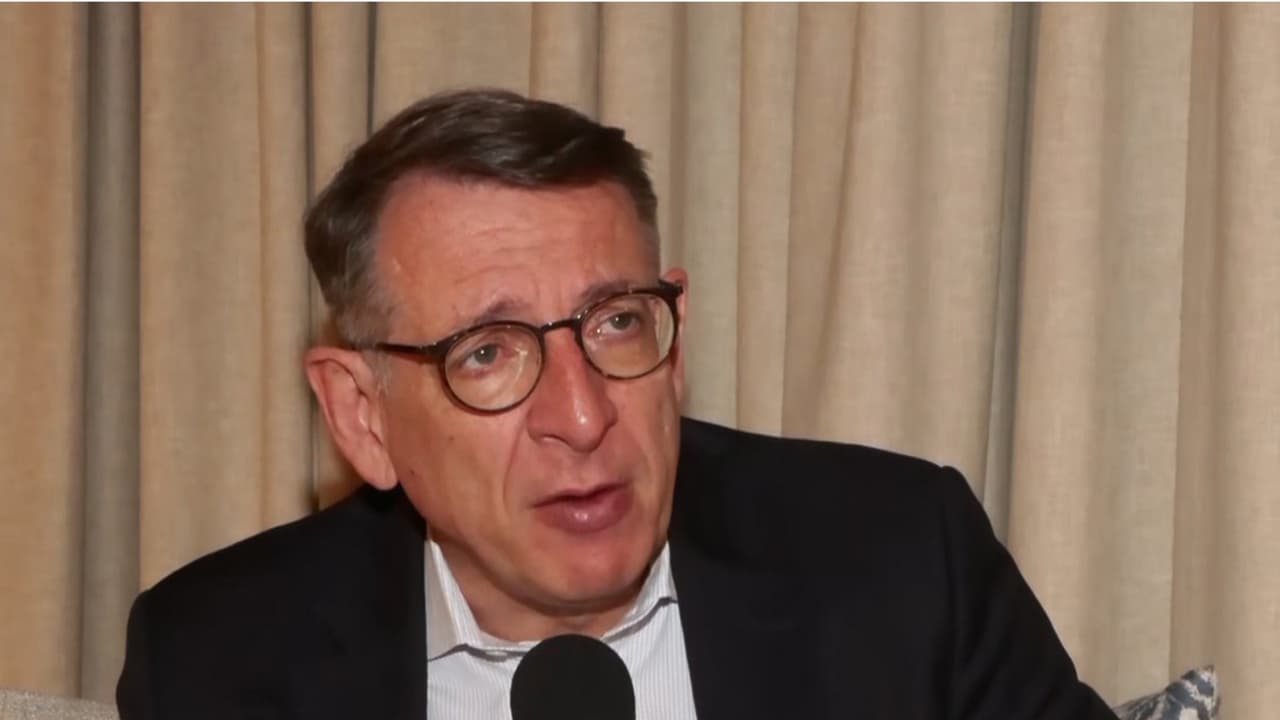
Frank-Jurgen Richter, ex-WEF Director, sees India as a bright spot in a gloomy world. He believes India has the momentum to become a global AI and manufacturing leader, noting Europe has 'missed the bus' on sovereign AI capabilities.
As the world grapples with the challenges of a perfect storm - war, energy crisis, and the upcoming AI crisis - India emerges as a bright spot in an otherwise gloomy global landscape. Frank-Jurgen Richter, former Director of the World Economic Forum and Chairman of Horasis, believes that India has the momentum to become a global leader in AI and manufacturing.

India's AI Ambitions vs. Europe's Lag
In an exclusive interview with ANI, Richter said that Europe has missed the bus in terms of setting up its own AI capacities and sovereign AI. "Europe is down, there is unemployment in Europe; it may have missed the bus in terms of setting up its own AI capacities and its own sovereign AI," he said.
In contrast, India is moving rapidly in the right direction, with a focus on AI, IT, manufacturing, and agriculture. Richter pointed to India's bold statement at the AI Impact Summit in Delhi in February, where Prime Minister Modi declared that India should be the AI Superpower of the future.
"Currently, we have two superpowers - US and China. The Chinese do their own AI, independent from the US...India is moving in the same direction and is trying to apply AI in manufacturing," Richter said.
Fostering an Industry 4.0 Environment
India's efforts to become an Industry 4.0 Superpower are gaining traction, with the government making significant strides in reducing red tape and corruption. "Since this government is in power, a lot of things have changed. The red tape corruption is coming to a minimum. I think that is a very positive change in setting up businesses," Richter said.
Path to Sustained Growth
To sustain this growth, Richter emphasised the need for India to continue welcoming Foreign Direct Investment (FDI) and avoid protectionism. "I think India should carry on like that and welcome FDI, and not be protectionist," he added.
As the world looks to India as a new engine of globalisation, Richter added that he was optimistic about the country's future. "I am very confident in India, but in the overall context, rather pessimistic," he said, highlighting the challenges currently faced by the global economy. (ANI)
(Except for the headline, this story has not been edited by Asianet Newsable English staff and is published from a syndicated feed.)